Make the most of your 12-hour layover in Doha by exploring Qatar’s modern skyline, vibrant souqs, and even venturing into the desert to experience the breathtaking Inland Sea — turning a short stopover into an unforgettable mini-adventure.
Doha wasn’t originally part of our travel plans — at least, not beyond a simple airport connection. But while booking our flights to Australia to visit Rafael’s sister in the Gold Coast, we found a great option with Qatar Airways that came with a long layover in Doha. Having enjoyed a similar stopover experience in Beijing a few years ago with China Southern Airlines, we thought: why not do it again? Instead of spending the day inside Hamad International Airport, we decided to use those 12 hours to explore what Qatar had to offer.
From gleaming skyscrapers to tranquil waterfront promenades and vibrant souqs, Doha is full of surprises for travelers with only a few hours to spare. In this post, we’ll share exactly how we spent our layover, the must-see highlights, and our best tips for making the most of a short visit to this dynamic Middle Eastern city. Whether you're passing through on your way to Asia or Australia or just curious about what Doha is like, this guide will help you turn a simple layover into a memorable travel experience.

IN THIS GUIDE
GENERAL INFORMATION
Qatar at a Glance
Qatar is a small but striking country located on the northeastern coast of the Arabian Peninsula. Before planning this trip, it had never been on our list of places to visit — partly because we were aware that homosexuality is illegal in the country. We were curious but cautious about what it would be like as LGBTQ+ travelers. Still, we were intrigued by its modern skyline, expansive deserts, and reputation for incredible hospitality, and decided to see it for ourselves during our layover.
Despite its small size, Qatar is highly developed, with modern infrastructure, safe streets, and a high standard of living. The country is home to around 3 million people, but only about 10-12% are Qatari citizens — the rest are expatriates from countries across Asia, Africa, and the Middle East. This mix gives the country a very international feel, especially in Doha, where English is widely spoken. The local currency is the Qatari Riyal (QAR), and most places accept cards, which we found very convenient.

Doha – Qatar’s Vibrant Capital
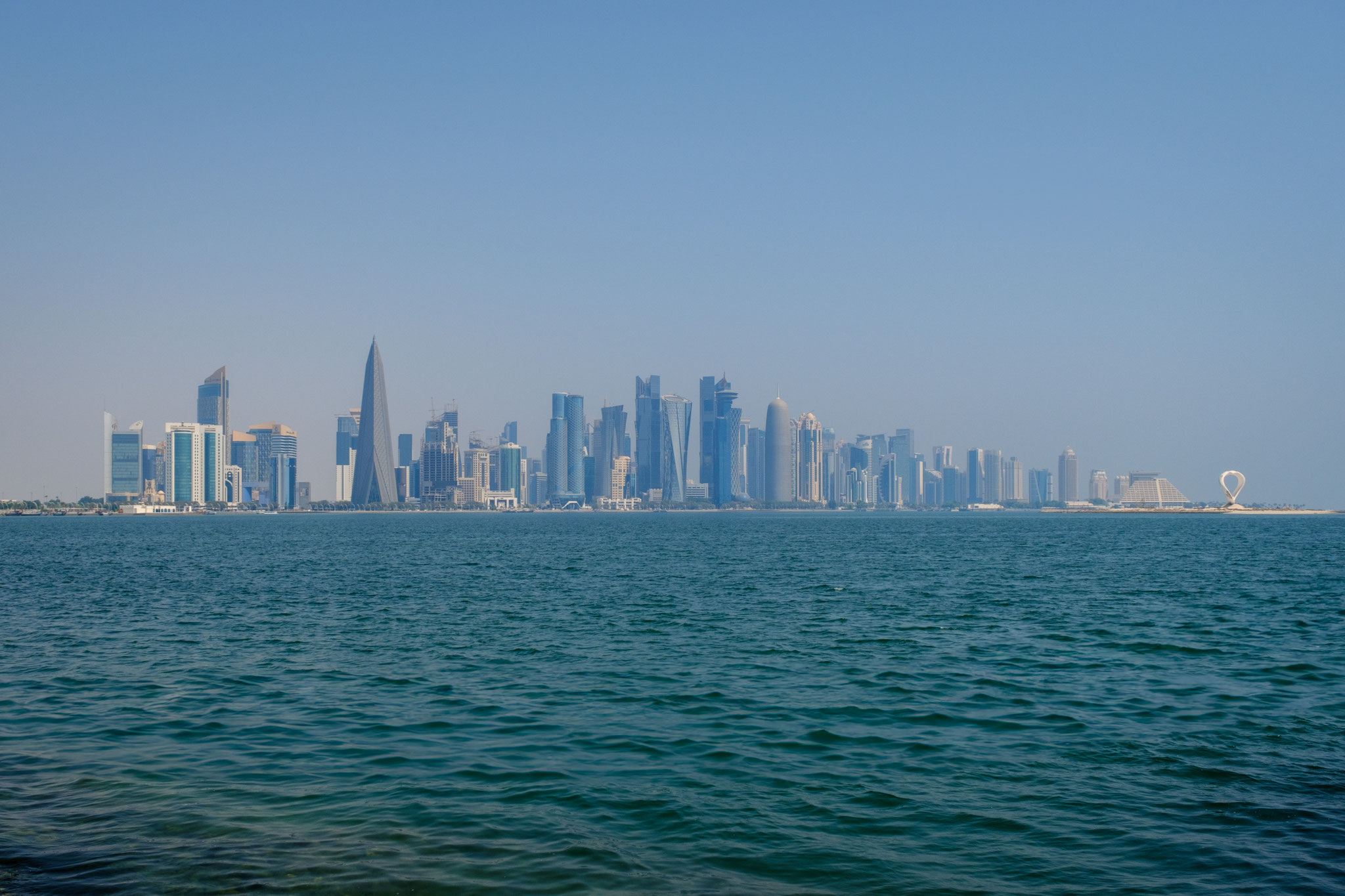
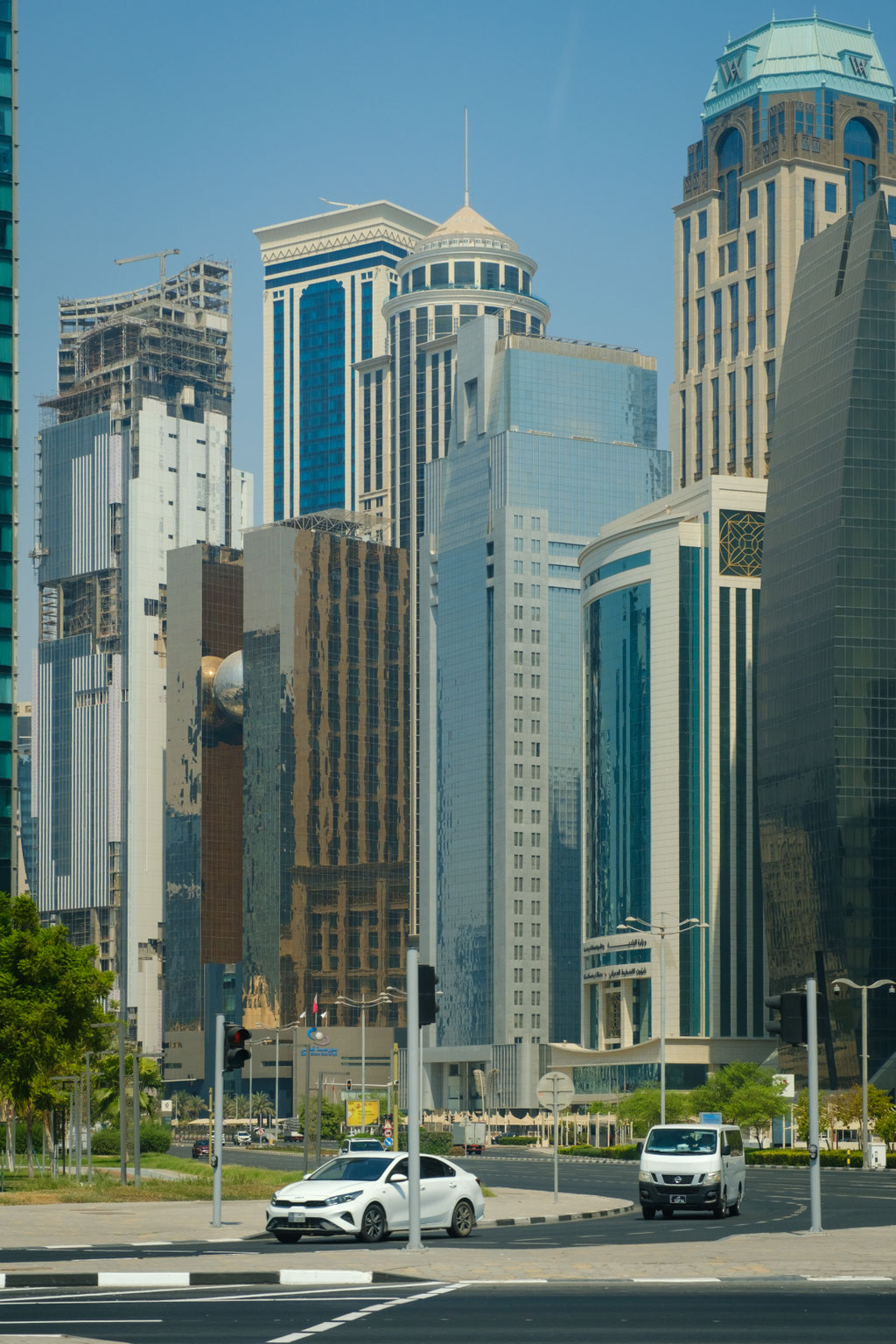
Doha, the capital of Qatar, is the country’s cultural, economic, and social hub. The city is home to around 1.5 million people, but the majority are expatriates, giving it a very international vibe. From the moment we stepped out of Hamad International Airport, we were struck by how clean and modern everything looked. Streets, buildings, and public spaces felt spotless, almost as if every detail had been carefully designed. Futuristic skyscrapers rise alongside traditional souqs, while waterfront promenades sit just a short distance from bustling commercial districts, creating a fascinating mix of modernity and tradition.
At the same time, the extreme heat in mid-September kept almost everyone indoors during the day, making the city feel unusually calm despite its thriving energy. We were pleasantly surprised to see some districts with air-conditioned bus stops — a clever solution to cope with the scorching desert sun. Even in the heat, Doha’s contrasts are striking: luxury shopping malls and art museums sit alongside traditional markets and scenic waterfronts. For us, this mix of futuristic architecture, local culture, and thoughtful urban planning made Doha an unexpectedly enjoyable and memorable stopover.
HISTORY
Qatar’s history stretches back thousands of years, with evidence of human settlement dating to prehistoric times. The country’s strategic location on the Arabian Peninsula made it an important center for trade, fishing, and pearling long before oil and gas transformed its economy. In the 19th and early 20th centuries, Qatar came under the influence of the Ottoman Empire and later the British, which helped shape its modern borders and political structures. The discovery of oil in the 20th century brought rapid development and transformed Qatar from a small desert peninsula into one of the wealthiest nations in the world.
Doha, now the nation’s capital and largest city, began as a modest fishing and pearling village. Its location on the coast made it an ideal hub for trade and maritime activity, gradually attracting settlers and merchants. Over time, Doha grew into the political, economic, and cultural heart of the country, especially after the discovery of oil and gas in the mid-20th century. Today, the city reflects this transformation, blending its historic roots with striking modern architecture, vibrant markets, and a cosmopolitan urban lifestyle.


PRACTICAL TIPS
VISA REQUIREMENTS
Qatar offers visa-free entry for citizens of many countries, though requirements vary depending on nationality — you can check the full list here. For us, the process was very easy: after landing at Hamad International Airport, we simply headed toward the exit, passed through immigration, and were quickly on our way. There were no long lines or confusing forms, and the officers were efficient. This hassle-free entry made starting our layover stress-free and allowed us to focus on exploring the city right away. It’s worth noting, though, that visa policies can change depending on your nationality or the type of passport you hold, so checking in advance is always a good idea. For most travelers, however, Qatar makes it very easy to get out of the airport and start exploring, even if you only have a few hours to spare.
Minimum LAYOVER DURATION
To comfortably enjoy a Doha layover and explore the city, we’d recommend a minimum of 6-7 hours. Typically, it takes about 1 hour to deplane and clear immigration and customs, followed by 15-30 minutes to reach downtown. This leaves around 3 hours to explore the city, which is enough for a short tour of highlights like the Corniche and Souq Waqif. Returning to the airport takes another 15-30 minutes, and you should allow around 2 hours to go through security, get to your gate, and board your flight. We had a bit more than 12 hours, which allowed us to fully explore Doha, take a desert trip to the Inland Sea, and still relax at an airport lounge to shower and refresh — which felt incredible after a full day in the heat.

TOUR AGENCY VS SOLO TRAVEL
When exploring Doha on a short layover, you can either book a guided tour or go solo. Tours are convenient and stress-free, handling all logistics, transportation, and timing — ideal if you’re tired from a long flight or want to make the most of your time. Many options are available on GetYourGuide and TripAdvisor. Qatar Airways also offers Discover Qatar Transit Tours, which can be booked directly at the airport for around 115 QAR per person (31-32 USD), with two Transit Tour desks at Hamad International Airport where you can get more information. On the other hand, if you prefer to explore independently during a Doha layover, you’ll have more flexibility to wander at your own pace. For our layover, we opted for a guided tour, which worked well, but both options are doable depending on your preference.
Weather in Qatar
We visited in mid-September, when temperatures often exceed 40°C (104°F). Even early in the morning, the sun felt intense, making air-conditioned stops essential. The dry desert air made it very different from Rafael’s hometown of Rio de Janeiro, where the heat is humid and sticky, but that didn’t make it any easier to stay outside for long. We constantly looked for air-conditioned spaces to cool off, and planning our stops around shade and AC became essential. If you’re visiting during the warmer months (which is most of the year), be prepared for extreme heat, carry plenty of water, and expect the streets to feel unusually quiet. The weather can shape your layover more than you might think — but with the right expectations, you can still enjoy exploring Doha.
GETTING THERE ON YOUR OWN
Navigating from Hamad International Airport to the city center is relatively easy, giving you the chance to make the most of your layover in Doha. Here are some convenient transportation options:
By Taxi
Taxis are available just outside the airport terminals and offer a convenient door-to-door service to the city center or any attractions you want to visit. Fares typically range from 70 to 100 QAR (approximately 20-27 USD), depending on your exact destination, and the drive to downtown takes about 15-25 minutes. Keep in mind that taxis only accept cash in the local currency.
By Ride-Hailing Services
Apps like Uber operate throughout Doha and are a reliable alternative to traditional taxis. They offer the same door-to-door convenience, often at a slightly cheaper price, and with the advantage of easy payment through the app. Fares typically range from 25 to 35 QAR (approximately 7-10 USD), depending on your exact destination
By Metro / Public Transportation
Doha’s metro system is modern, fast, and air-conditioned, with a station located directly inside Hamad International Airport. It provides a convenient way to reach major tourist and business centers, including many cultural attractions. A day pass costs just 6 QAR (around 1.65 USD), and the ride to the city center takes about 20 minutes. While efficient and budget-friendly, the metro can be slightly less convenient for a short layover since you might still need additional transport to reach some attractions.
Safety & Cultural Tips
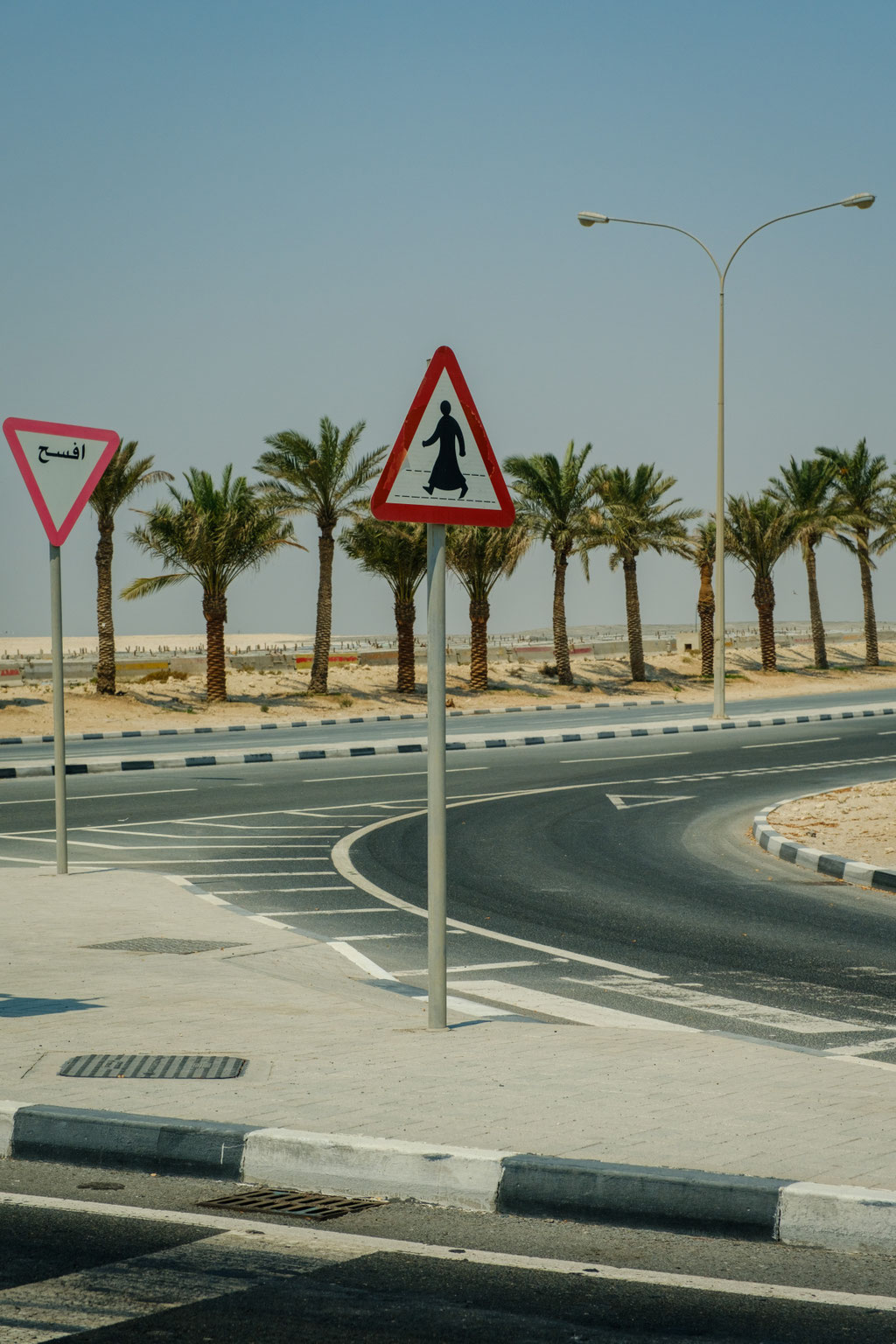
Qatar is extremely safe for travelers, with low crime rates and a well-organized public environment, making layovers smooth and stress-free. Still, it’s important to be mindful of local customs. Qatar is a conservative Muslim country, so modest clothing is appreciated — covering shoulders and knees is a good general guideline when walking around markets, malls, or public spaces. Swimwear is totally fine at hotel pools and private beaches. Public displays of affection are discouraged for everyone, regardless of orientation, and behaving respectfully in public spaces goes a long way. Overall, we found people polite, helpful, and welcoming.
As LGBTQ+ travelers going through Doha, we didn’t experience any issues during our layover. We were aware that same-sex relationships are illegal in Qatar, so we made sure to avoid public displays of affection, which is generally expected of all couples anyway. By being discreet and respectful of local norms, we felt safe throughout our visit. Overall, our short stay and transit through Doha was smooth and uneventful, showing that LGBTQ+ travelers can enjoy a layover in the city while being mindful of the legal context.
Airport Amenities
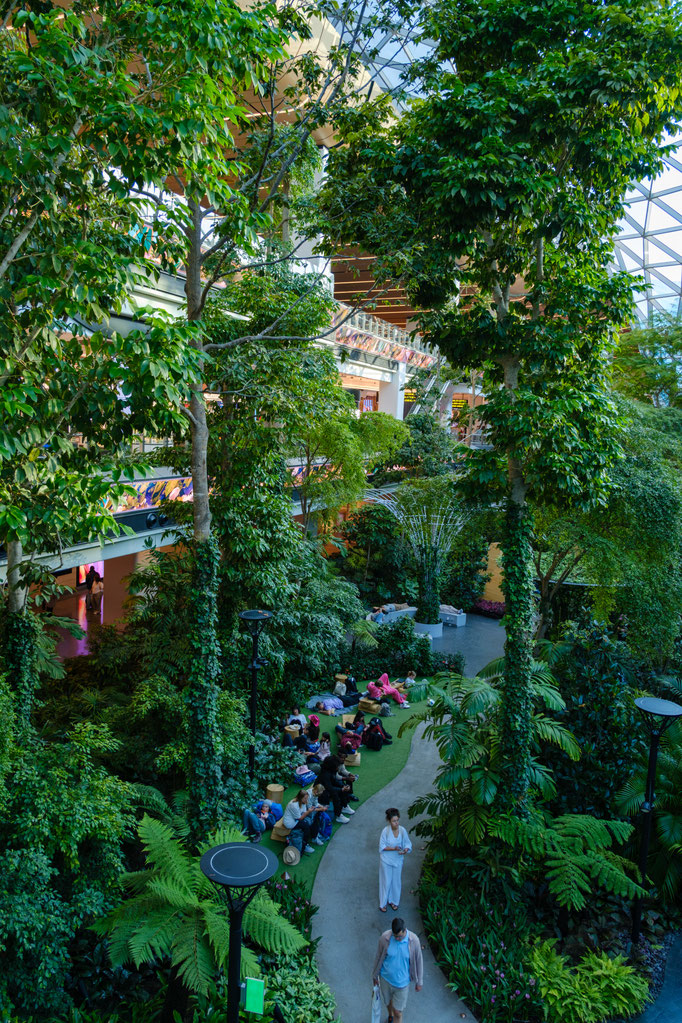
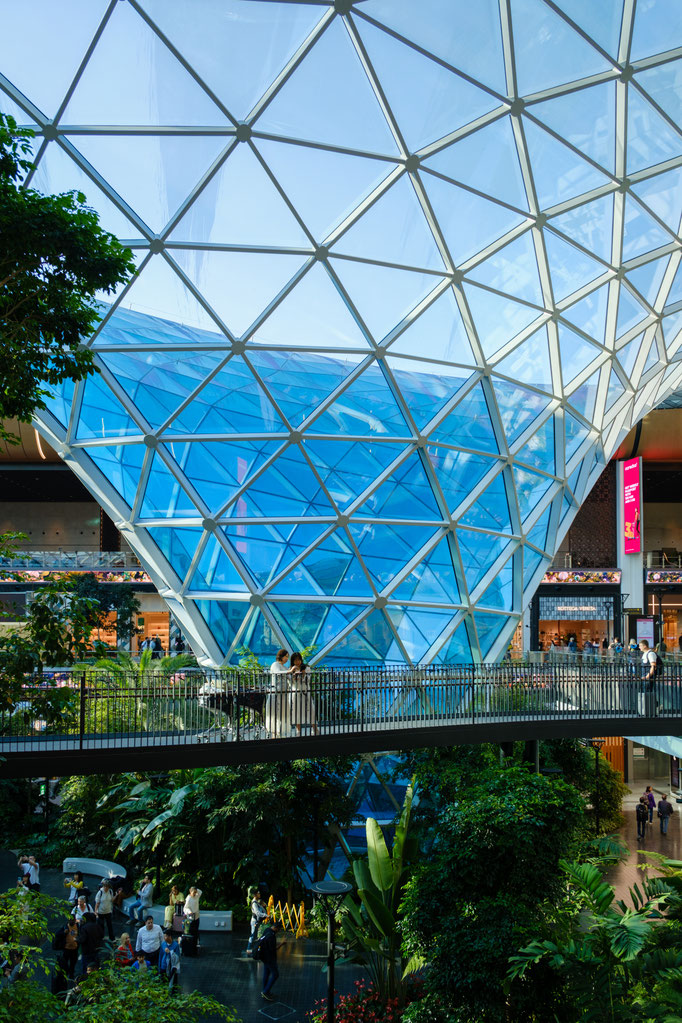
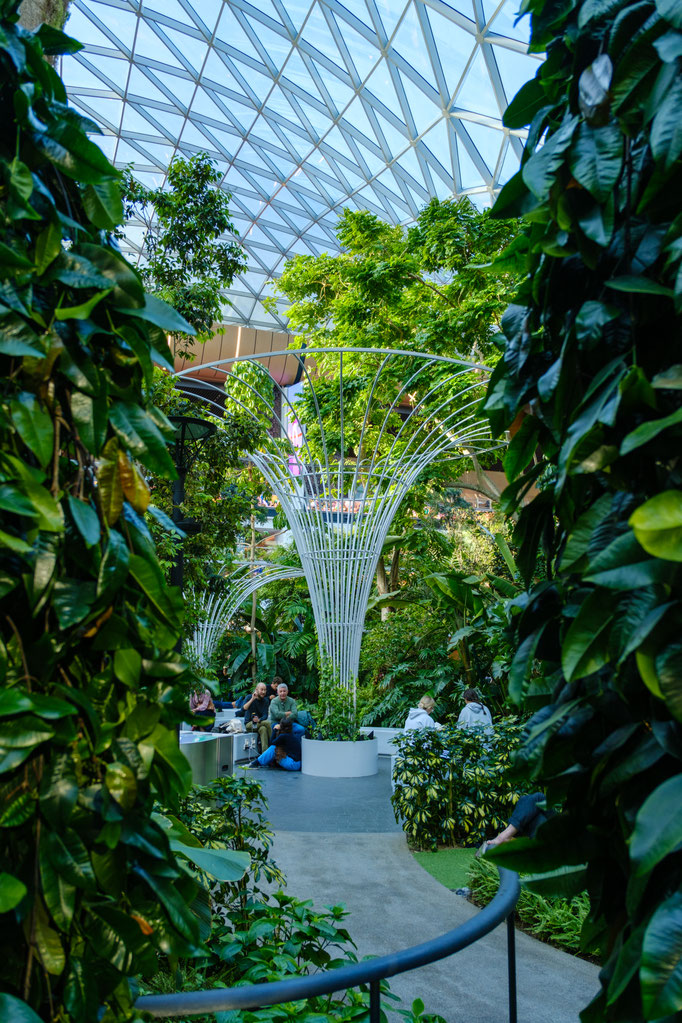
Hamad International Airport is, without a doubt, the best airport we’ve ever been to. We were blown away by how spacious, modern, and architecturally stunning it is. Walking through the terminals felt more like exploring a high-end mall or a museum than an airport, with luxurious brand stores, great dining options, and even an indoor tramway to get around. Our favorite part had to be The Orchard — a breathtaking indoor tropical oasis filled with lush greenery and natural light. We spent some time there just relaxing and taking it all in, and it quickly became the most memorable part of our layover.
The airport also has numerous lounges, ranging from luxurious to more standard options. After exploring Qatar in the intense heat, taking a shower was non-negotiable, and the lounge facilities made that easy. We chose the Platinum Lounge South, which provides a comfortable space to relax. Many lounges at Hamad International Airport can be accessed for under 100 USD per person; for example, the Oryx Lounge costs around 55 USD, while other lounges like Al Maha start around 50-70 USD, depending on the exchange rate and the lounge chosen. These lounges make it easy to refresh, eat, or simply unwind before your next flight.

LAYOVER TOUR INFORMATION
RECOMMENDED TOUR AGENCY
For our Doha layover, we booked the Doha Combo City Tour and Desert Safari, an ideal option for anyone on a short visit in Doha. This tour combines a city tour with a desert excursion, allowing us to see the highlights of the capital and venture out to the Inland Sea. The tour covered major attractions, from the Corniche and Souq Waqif to modern landmarks, while the desert portion offered a chance to experience the dunes without worrying about logistics and transportation. The driver was friendly and professional, and the 4x4 vehicle was in good condition, which made the desert portion much more comfortable — especially in the extreme temperatures.
That said, the tour did feel a bit rushed at times, and we would have loved more time at each stop, but having someone else handle all the planning made the day far less stressful. Everything, from airport pickup to the return trip, was taken care of, allowing us to focus entirely on enjoying the experience. If you’re comfortable planning on your own, Doha is manageable solo thanks to taxis and ride-hailing apps, but for a short layover, a guided tour like this is a stress-free way to explore the city and nearby desert. Just be prepared for the heat and consider asking to spend a little extra time at the locations that interest you most.

COST OVERVIEW
For the Doha Combo City Tour and Desert Safari, the price is around 120 USD per person. The cost covers the guided city tour, the desert excursion to the Inland Sea, and transportation in a comfortable 4x4 vehicle with a professional driver. Booking is simple, usually requiring full payment online through platforms like TripAdvisor or GetYourGuide, which makes confirming your spot easy and secure.
Tour Price Breakdown
The tour price includes airport pickup and drop-off, all transportation between city and desert locations, and the services of a knowledgeable English-speaking guide. This ensures you can explore Doha’s highlights and the desert comfortably without worrying about logistics. While the price does not include meals, personal expenses, or gratuities, we were pleasantly offered a traditional Qatari coffee and bottled water by our driver — small gestures that made the experience even more enjoyable. It’s still a good idea to bring some extra cash for snacks and souvenirs.


LAYOVER TOUR itinerary
National Museum of Qatar
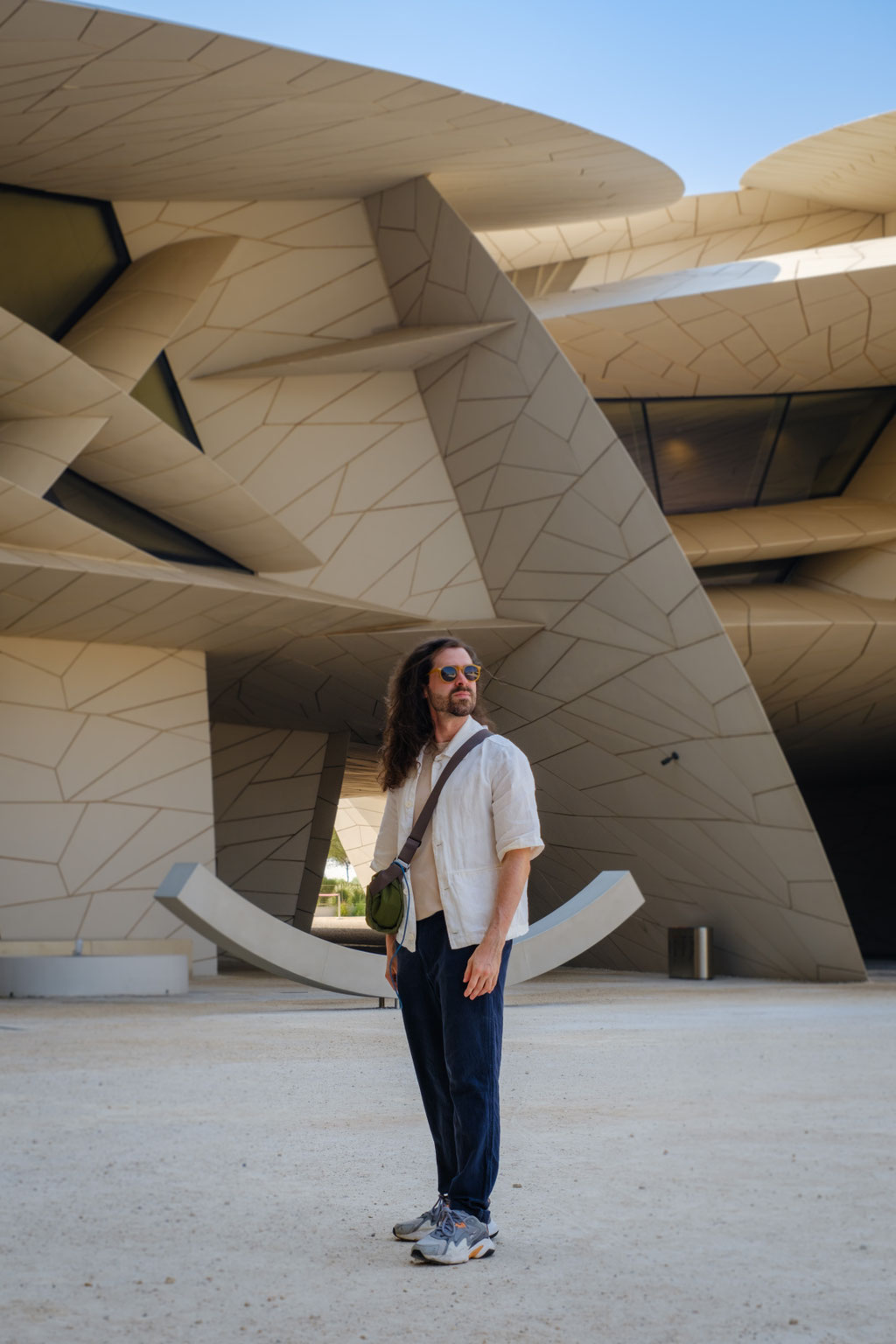
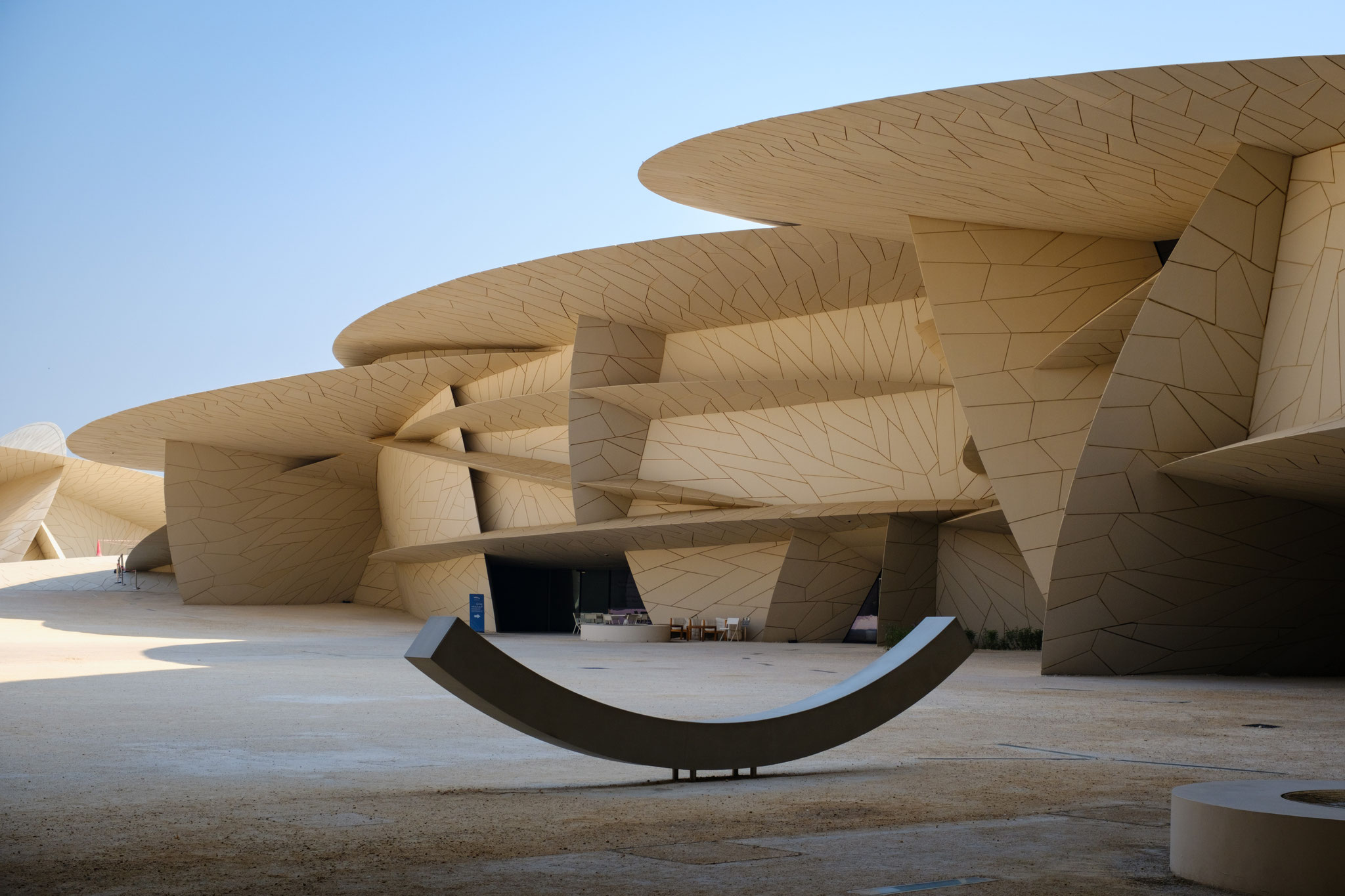
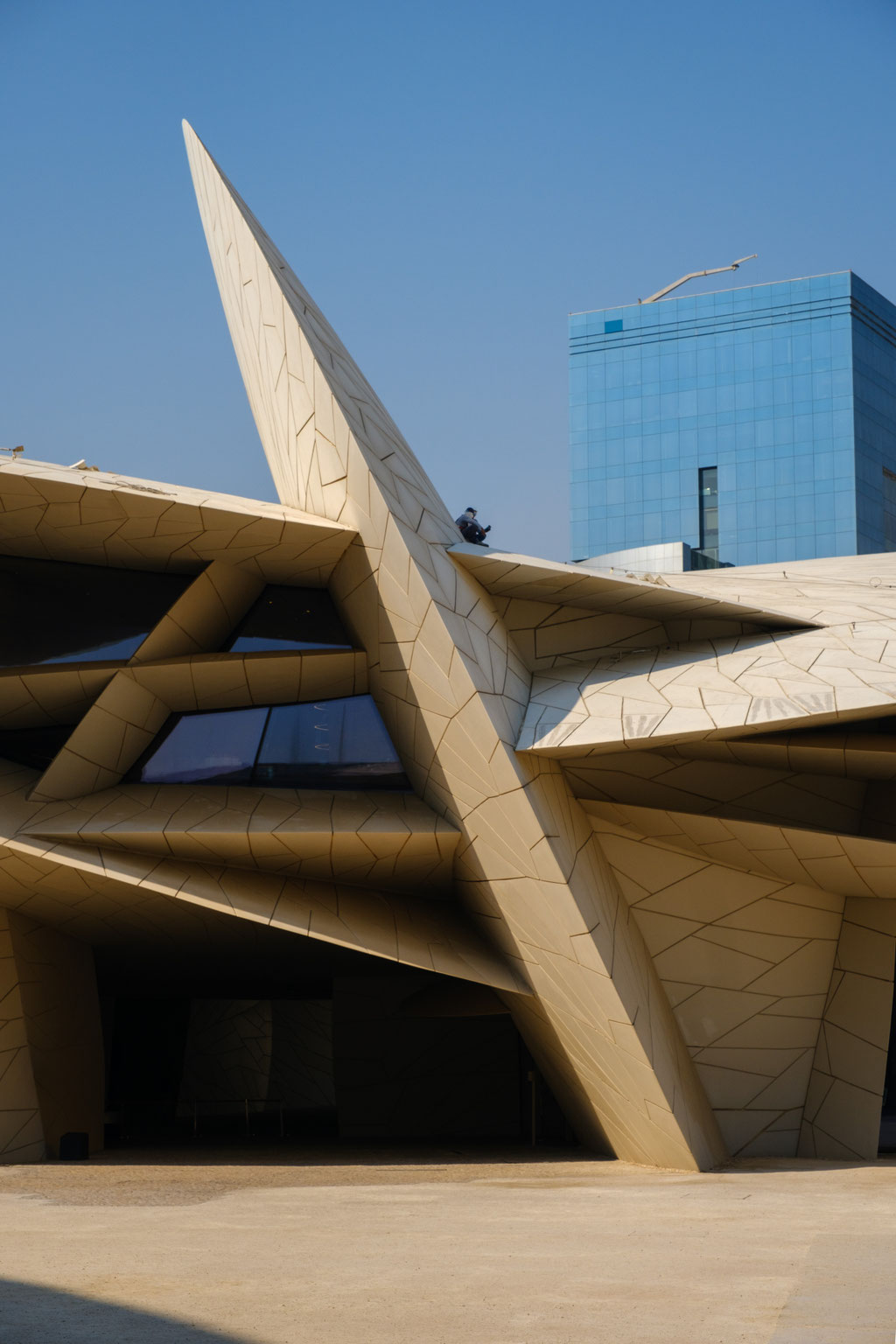
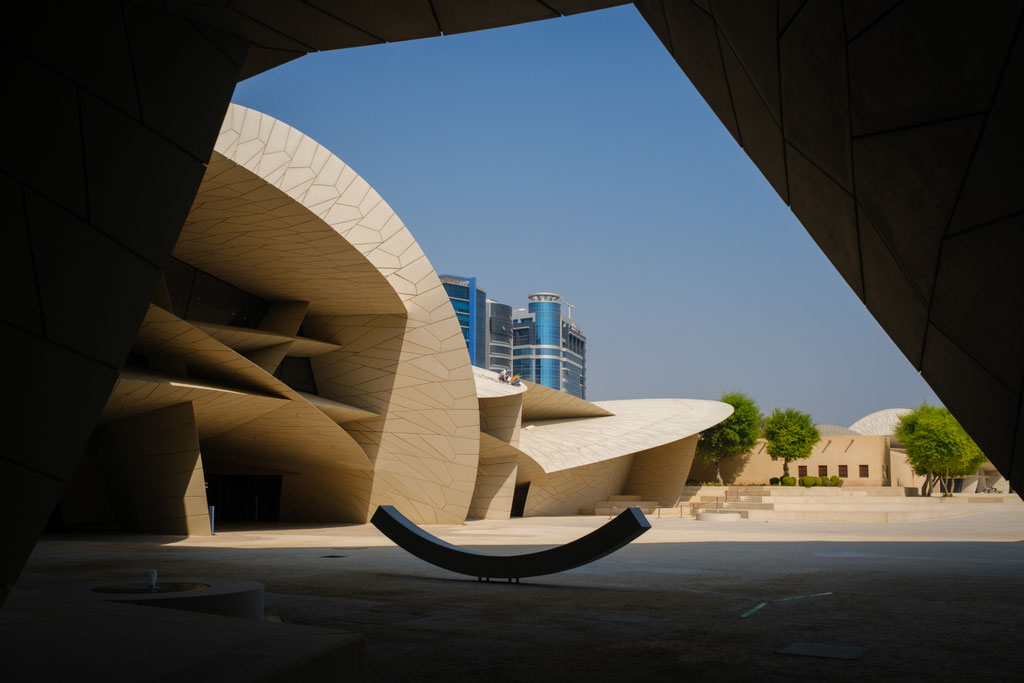
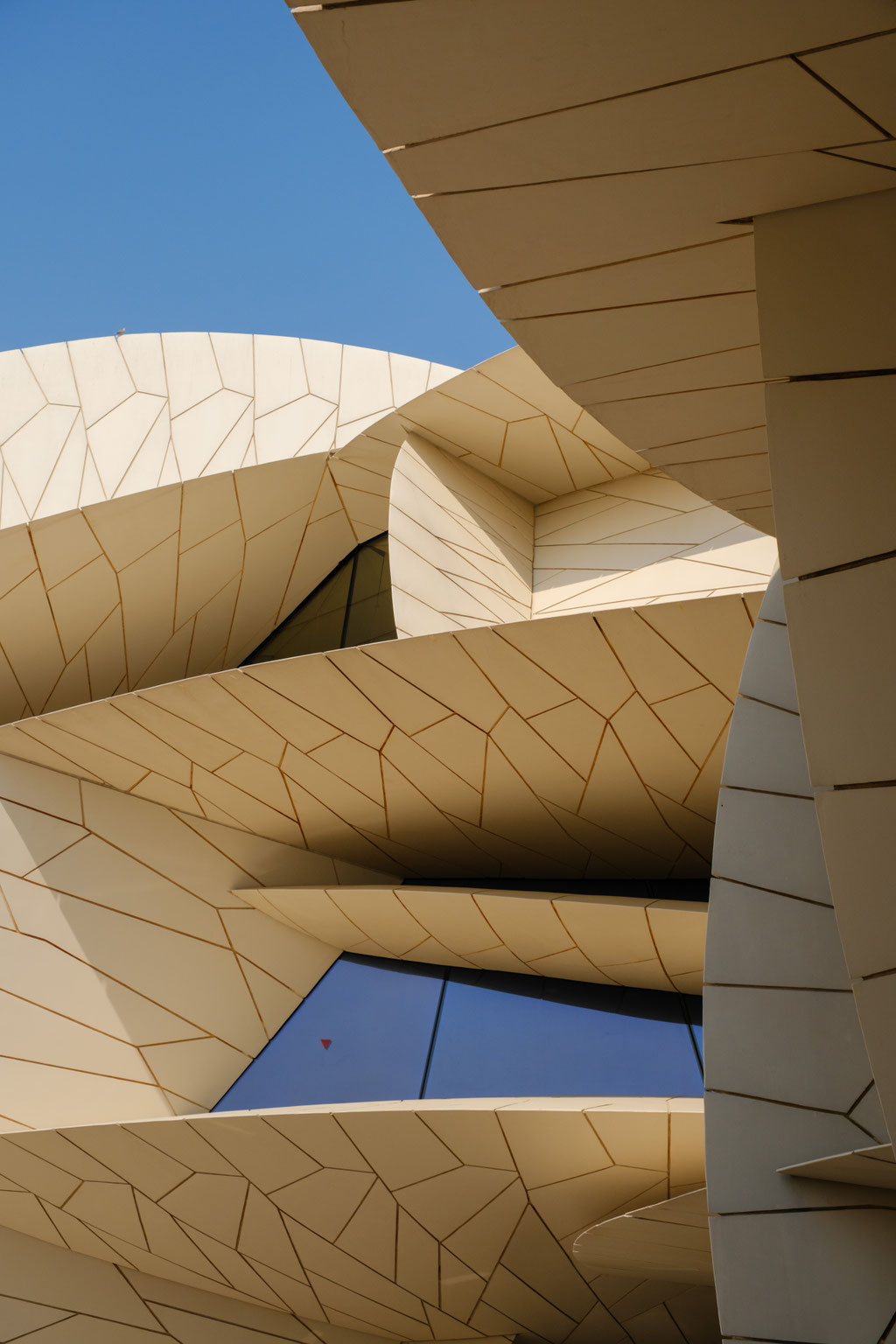
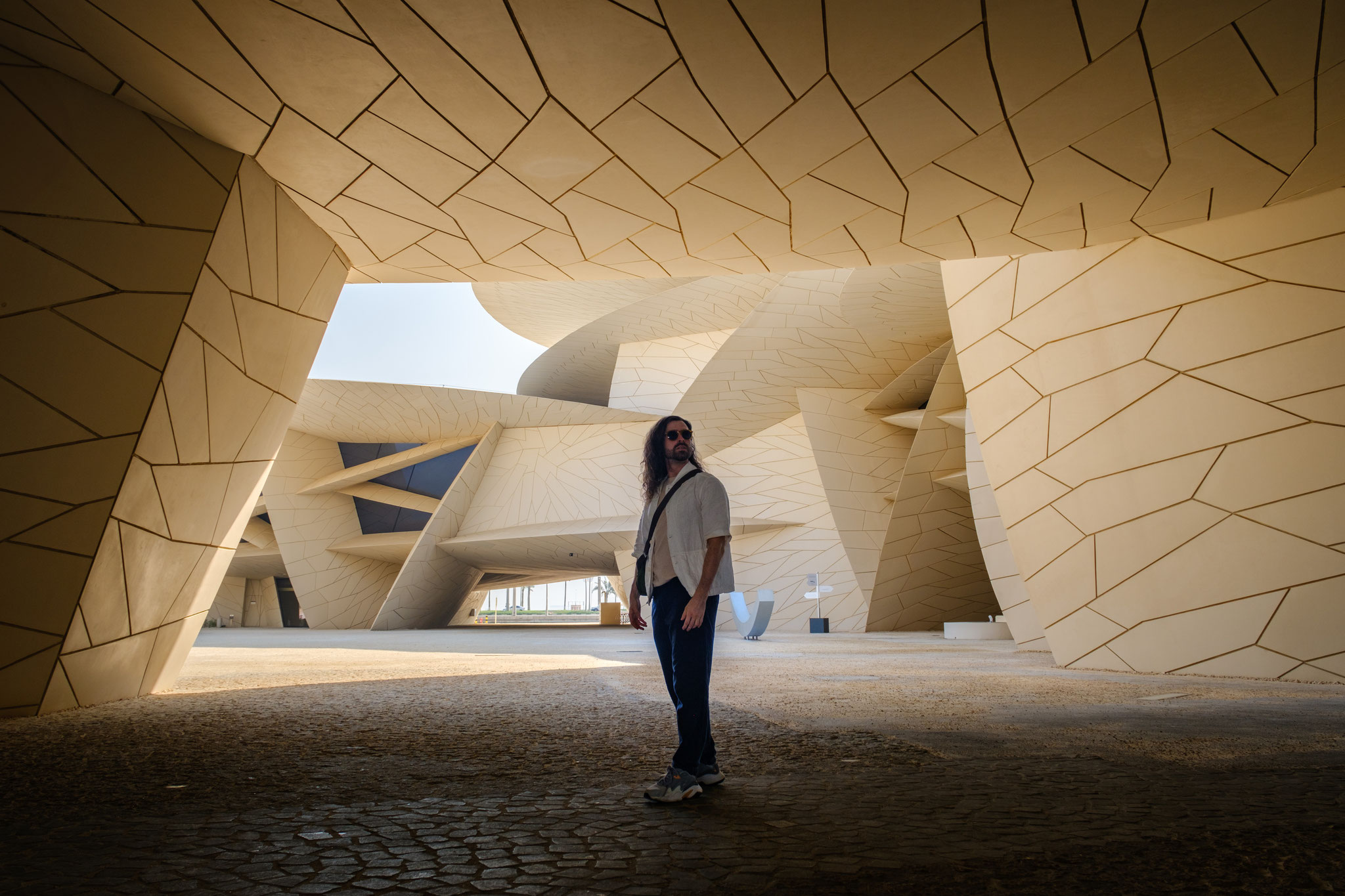
Our layover tour began right after we were picked up from Hamad International Airport. Just a 15-minute drive later, we arrived at the National Museum of Qatar, which officially opened in March 2019. Since it was still early in the morning, the museum was closed, so we were not able to go inside. But from the outside, we were struck by the stunning architecture. Designed by French architect Jean Nouvel, the building is inspired by the desert’s natural “desert rose” formations, with sweeping curves and interlocking discs that make it look like a sculpture rising from the sand. It’s an incredible spot for photos and gives a strong first impression of Qatar.
Inside, the museum houses a rich collection of exhibits covering Qatar’s history and culture, from ancient archaeological finds and Bedouin life to the country’s rapid development fueled by oil and gas. The layout features immersive displays and interactive installations, providing a deep dive into the nation’s heritage. Even though we didn’t explore the galleries, just seeing the building up close was inspiring. Due to the scorching sun, we didn’t linger long and quickly headed back to our 4x4 to continue to our next stop.
| Opening hours - daily from 9 a.m. to 7 p.m. |
| Admission - 25 QAR (7-8 USD) |




Museum of Islamic Art
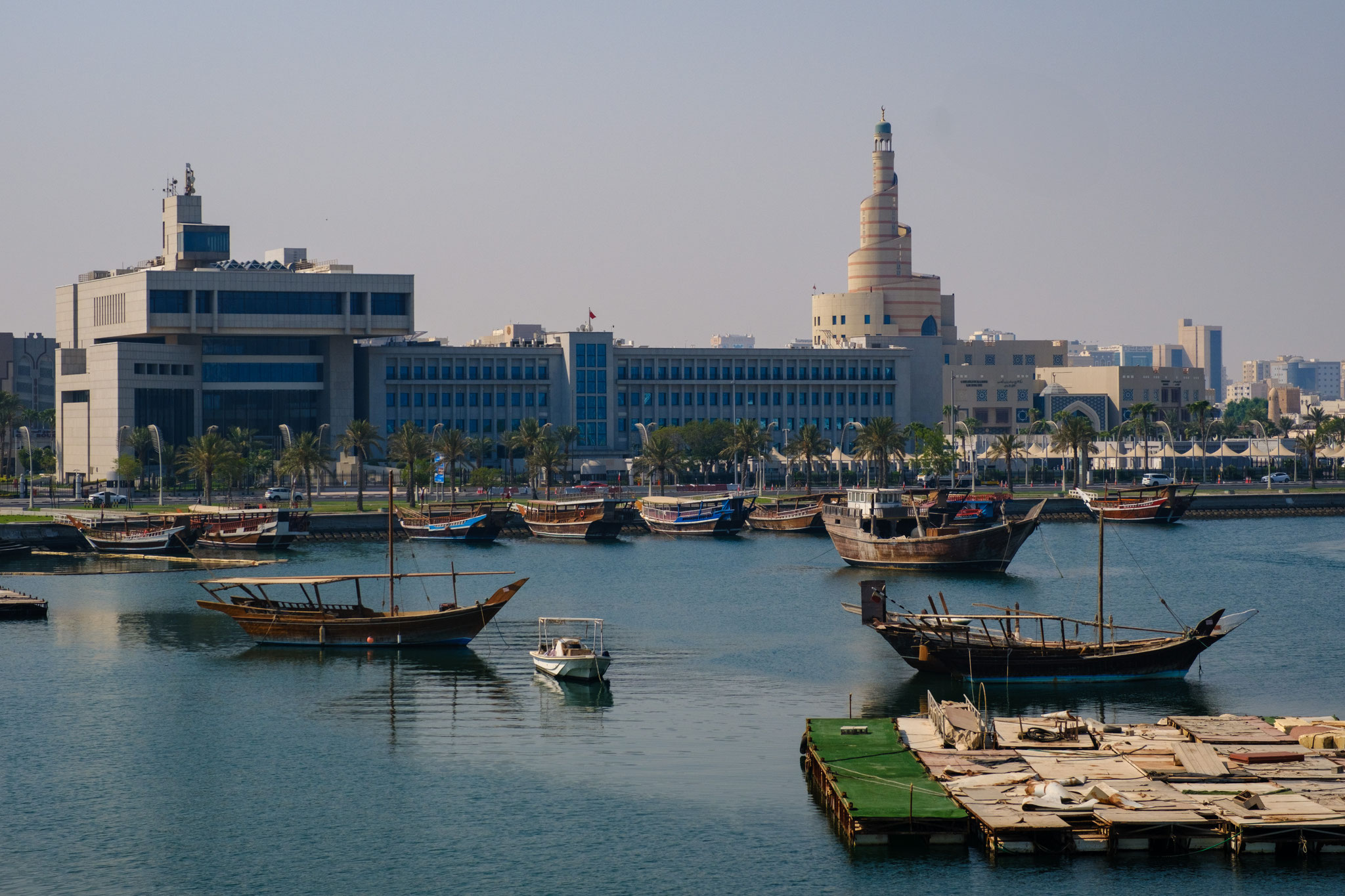
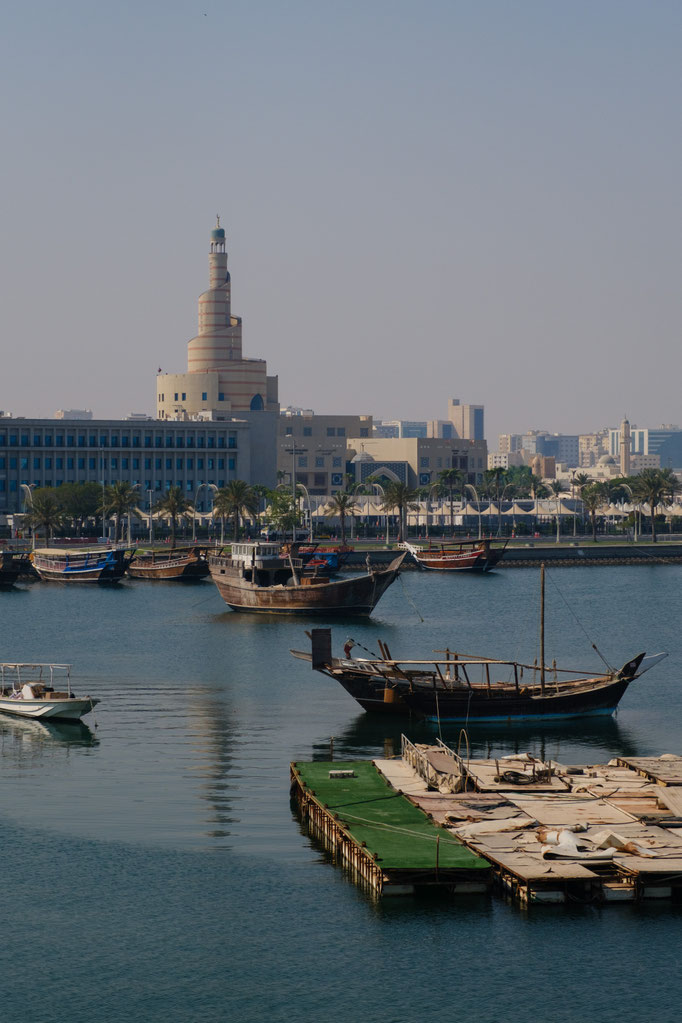
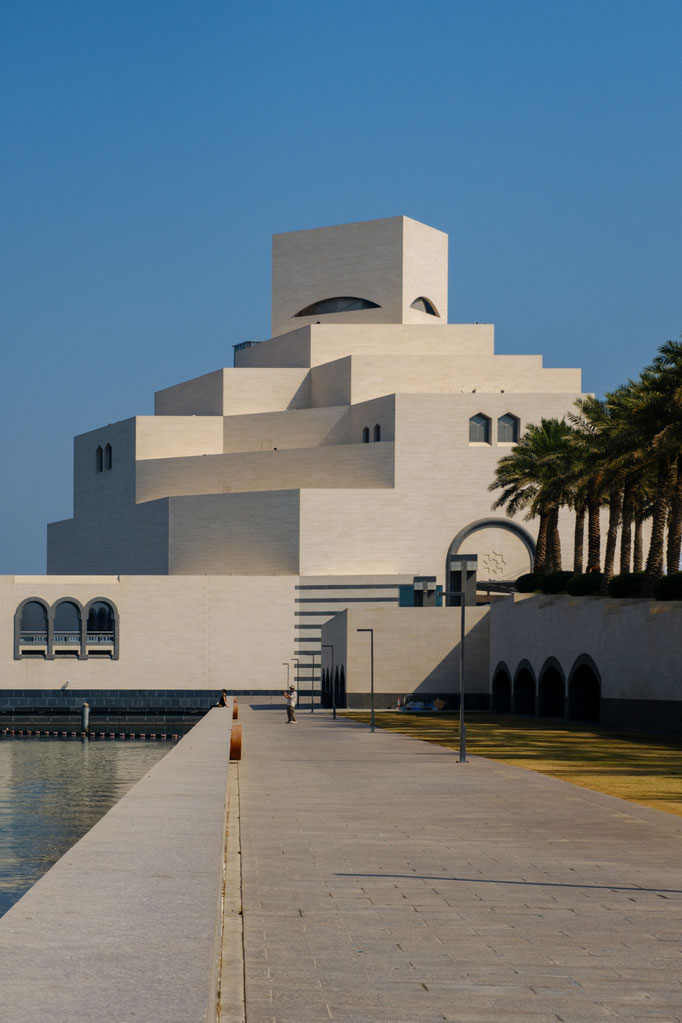
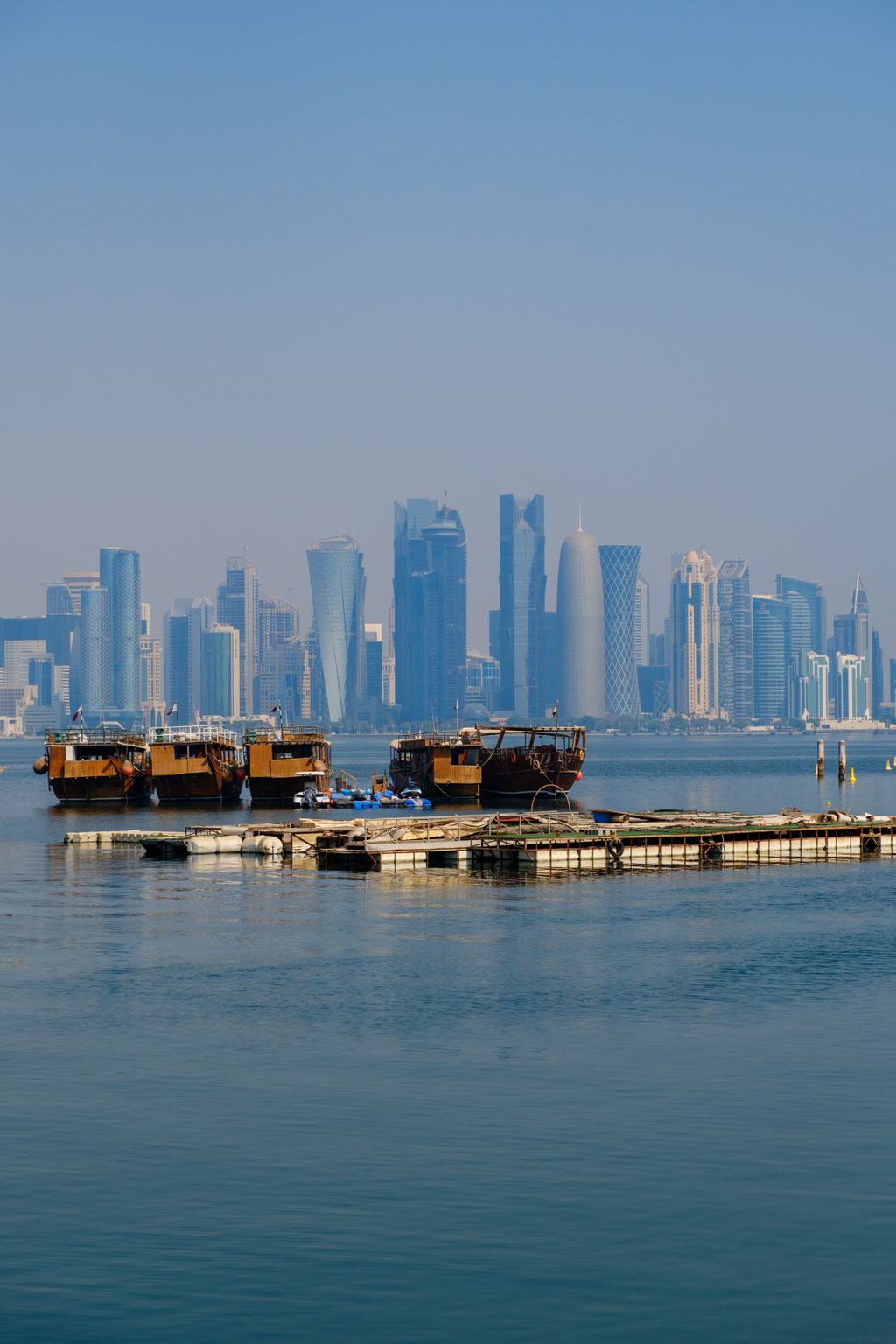
After admiring the striking architecture of the National Museum of Qatar, we asked our driver if we could make a quick stop at the nearby Museum of Islamic Art. From this spot, we had a great view of Doha’s traditional wooden fishing boats, or dhows, bobbing in the harbor, which provided a good contrast to the modern skyline rising behind the waterfront promenade. Although we only had a short time to get out and take photos, it was a worthwile stop that gave us a first glimpse of Qatar’s blend of tradition and modernity.
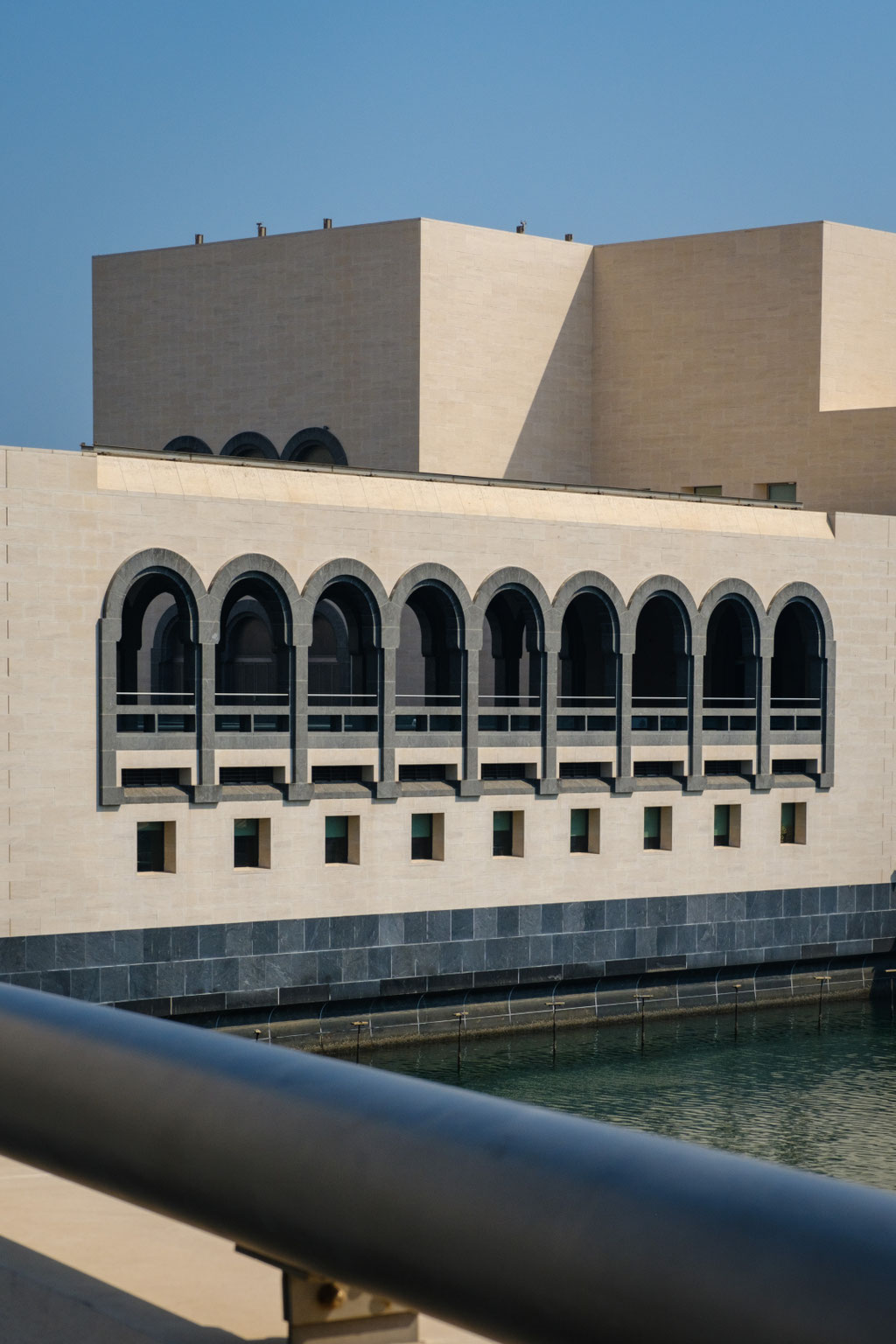
The museum itself, opened in 2008 and designed by the renowned architect I. M. Pei, houses one of the world’s most impressive collections of Islamic art. Inside, visitors can explore works spanning 1,400 years, including ceramics, textiles, metalwork, manuscripts, and jewelry from across the Islamic world. The building’s geometric design and dramatic interior spaces are as much a part of the experience as the art it contains. Even though we didn’t go inside, seeing the museum and its location along the Corniche gave us a sense of Qatar’s rich cultural heritage and its harmonious blend of tradition and modernity.
| Opening hours - daily from 9 a.m. to 7 p.m. |
| Admission - 50 QAR (14-15 USD) |


Souq Waqif
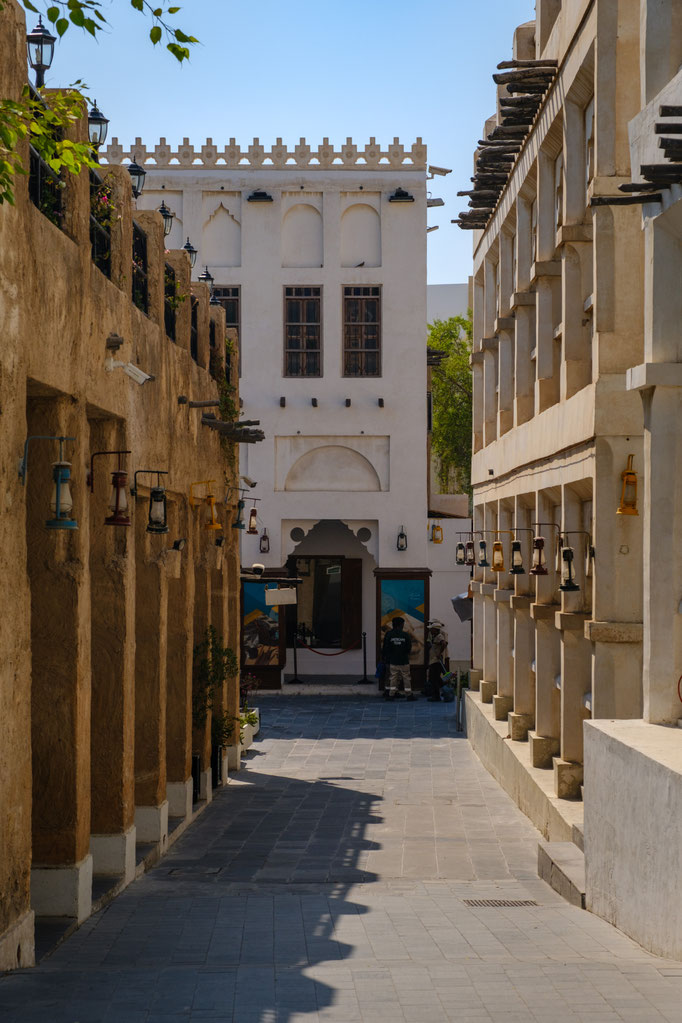
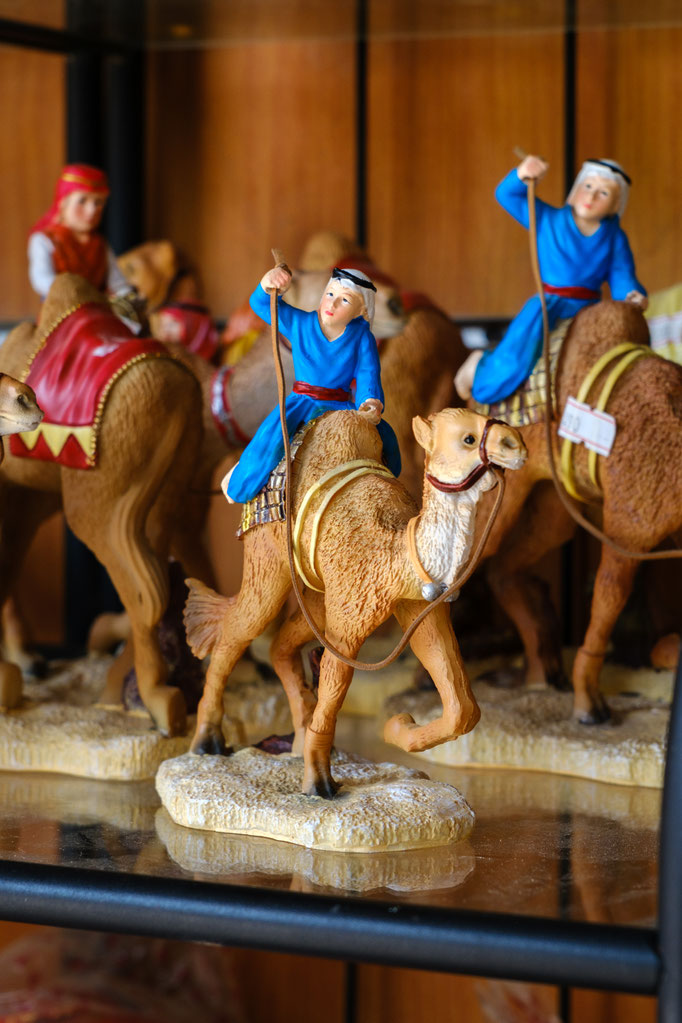
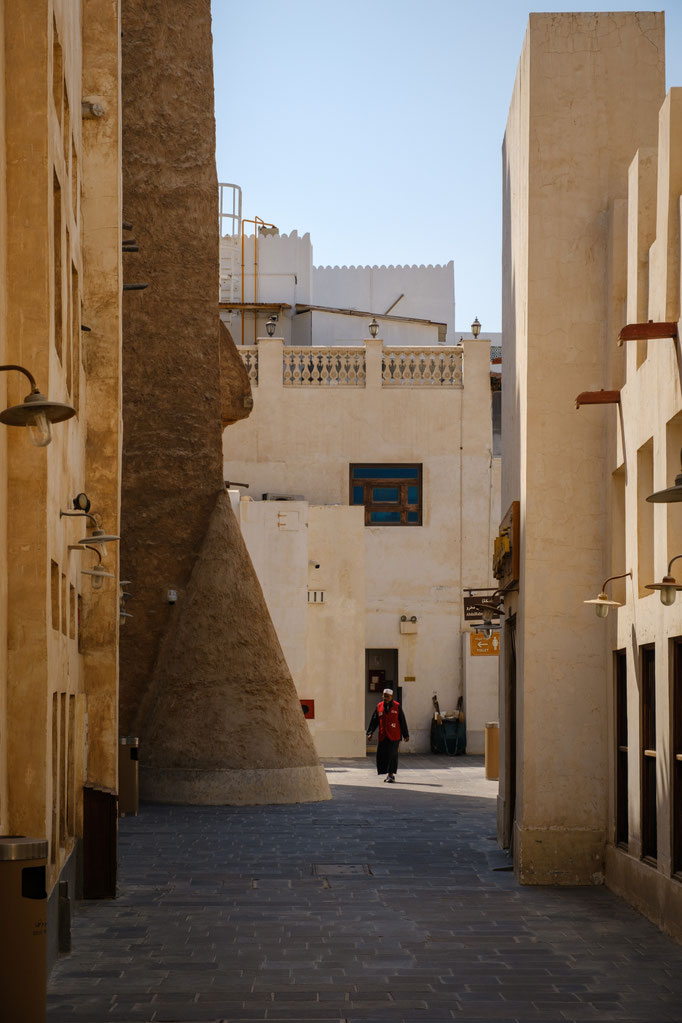
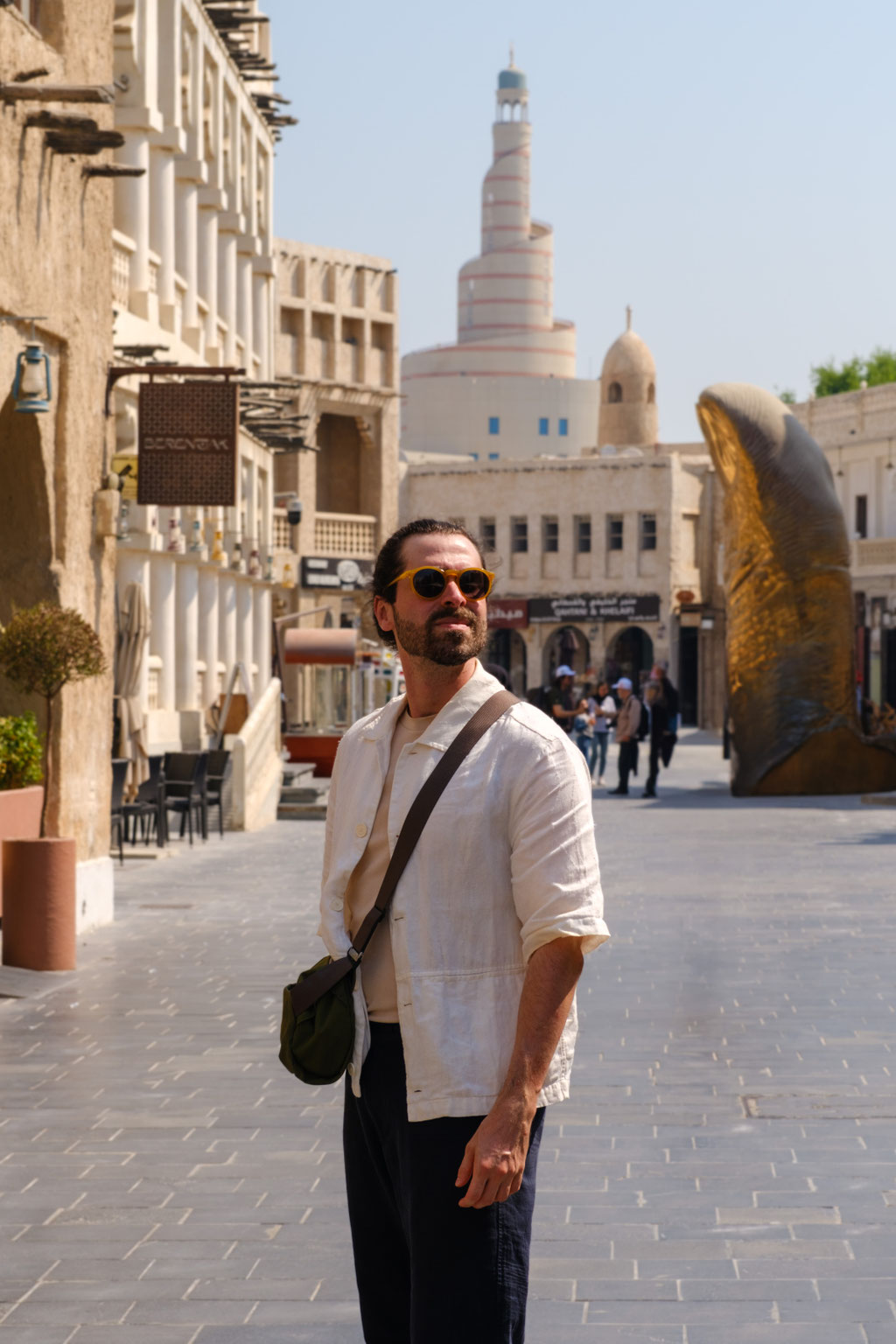
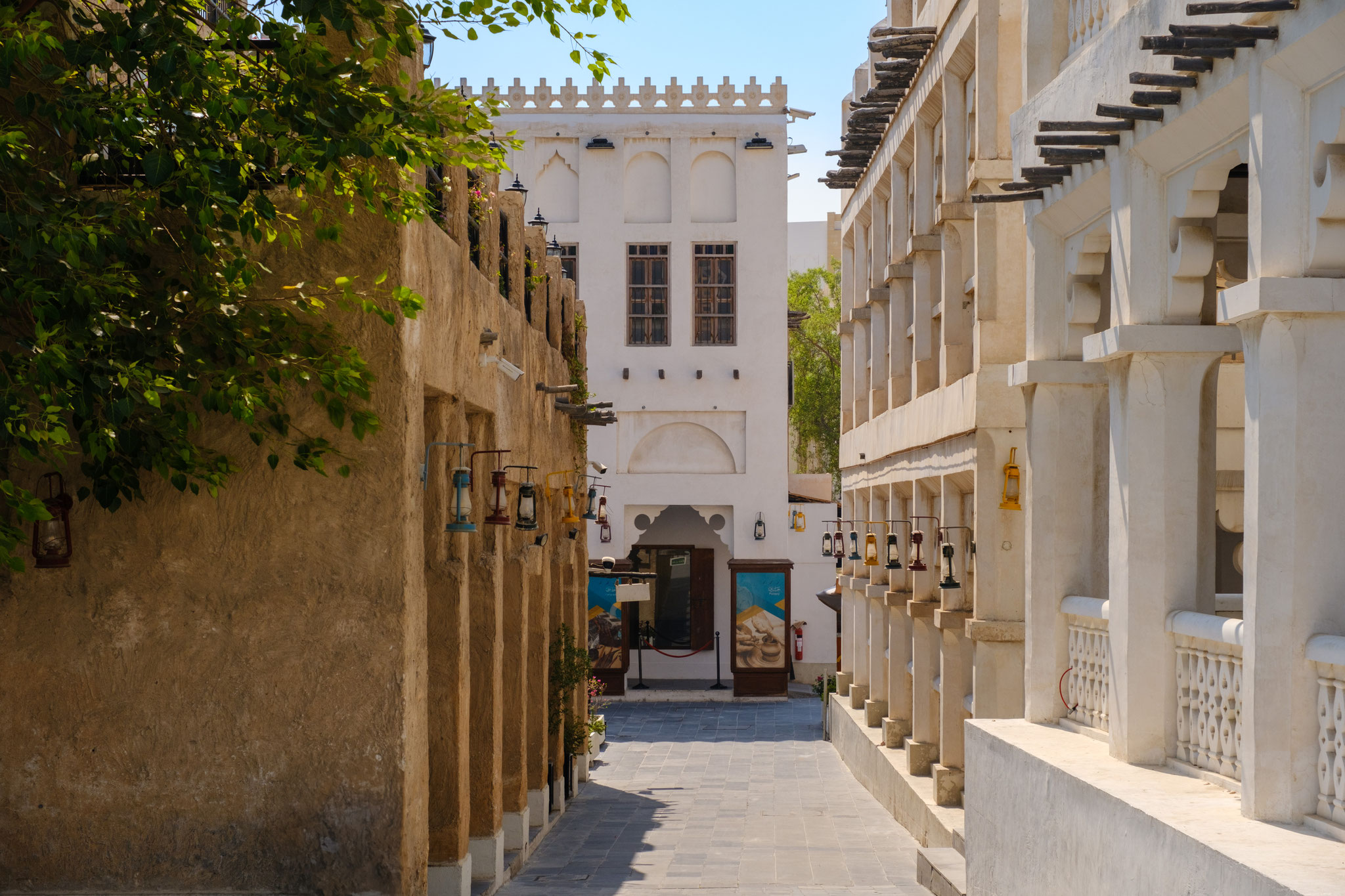
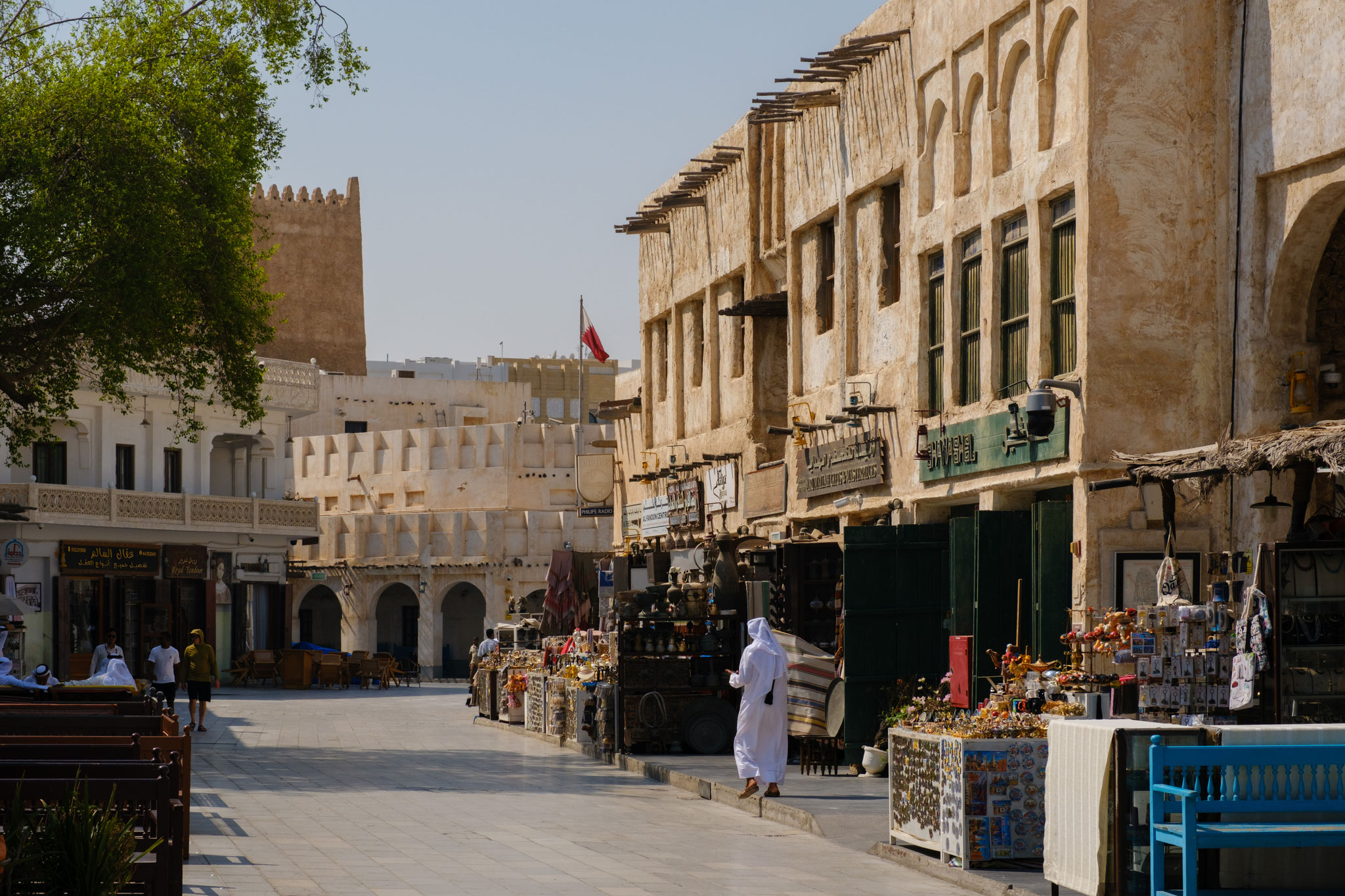
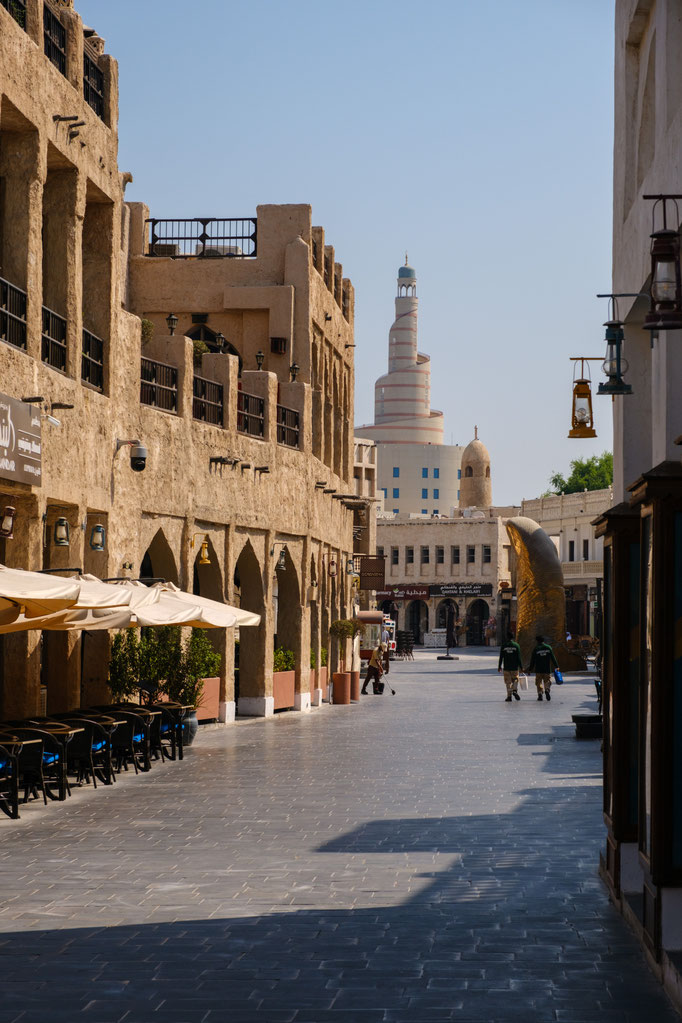
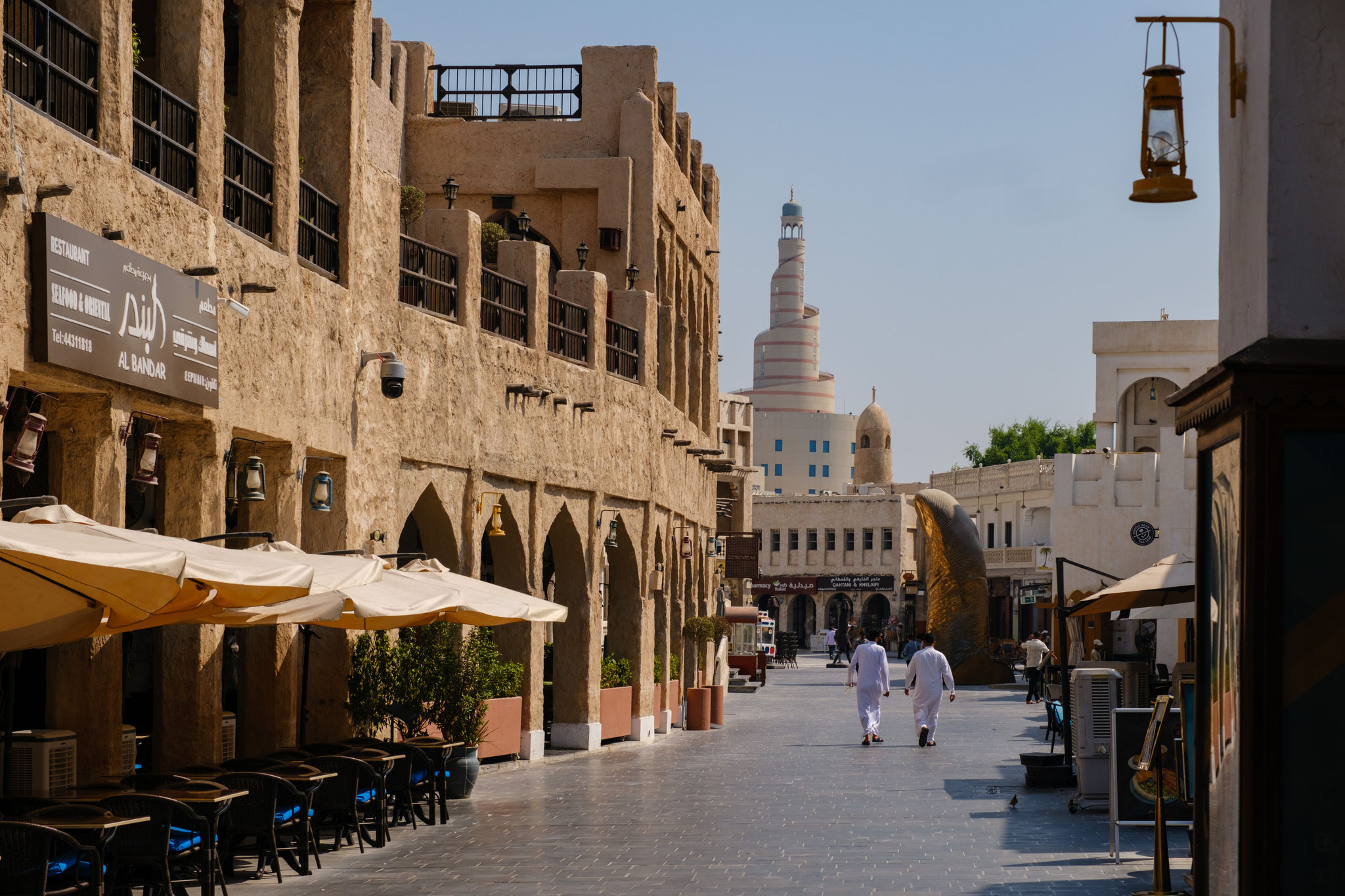
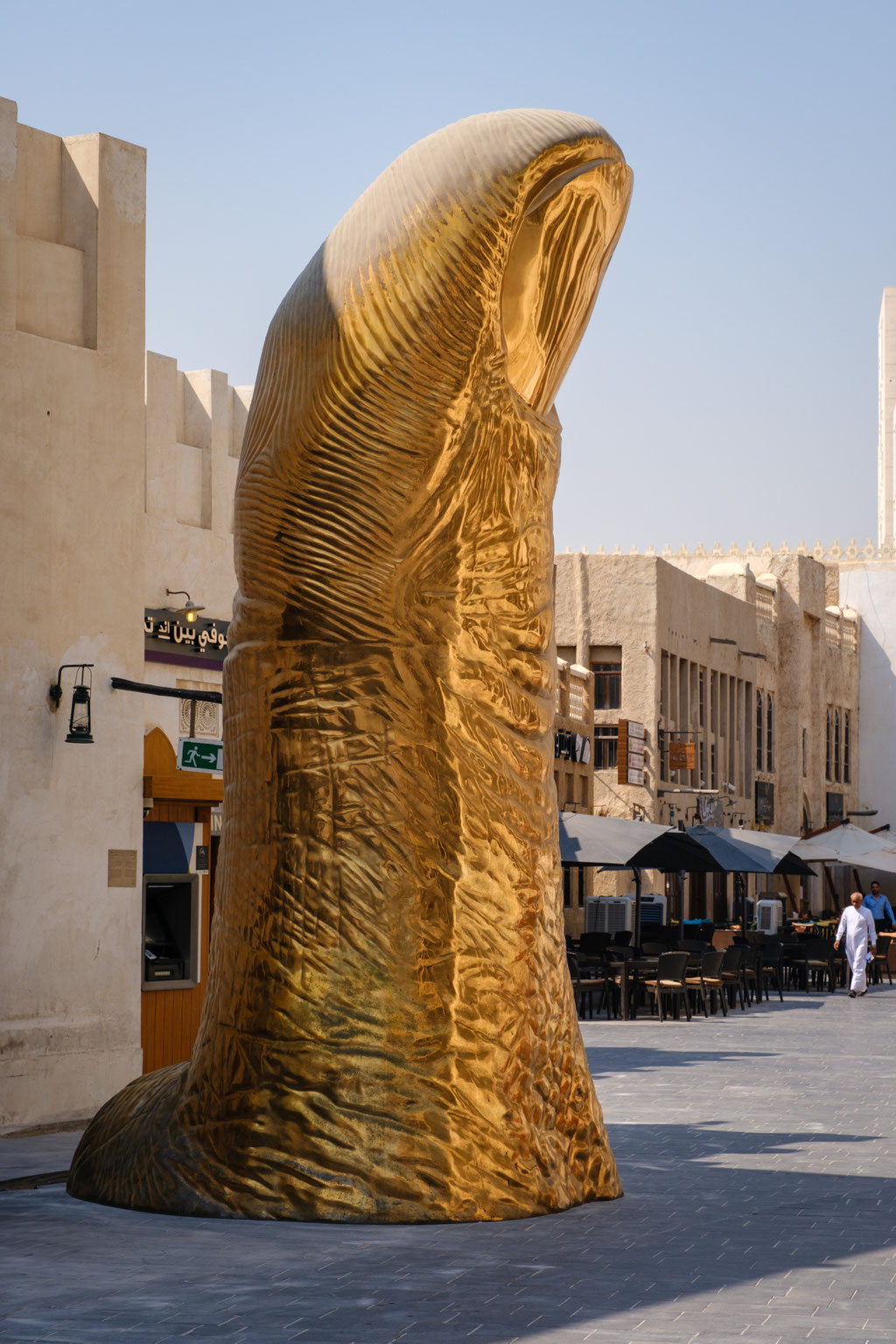
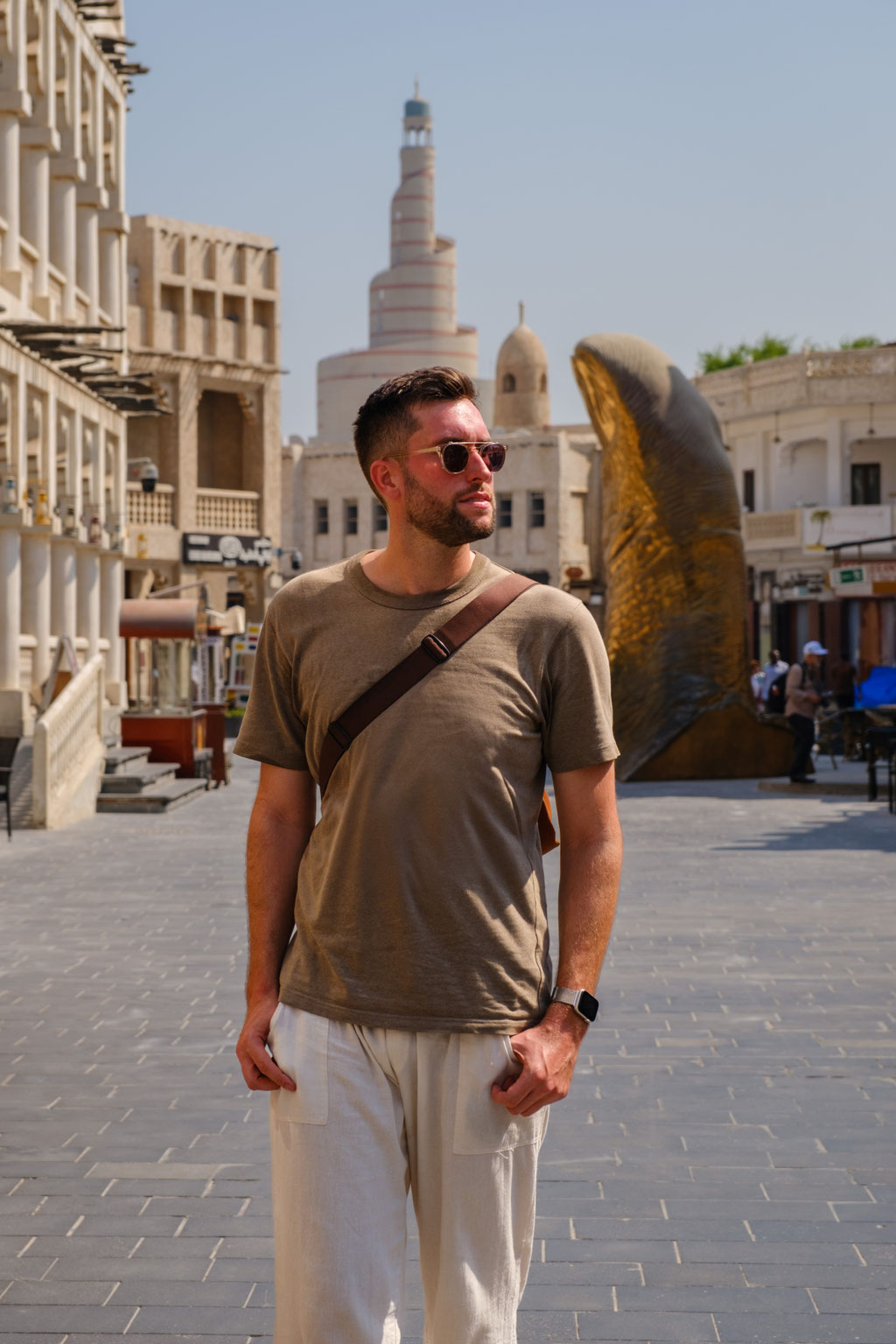
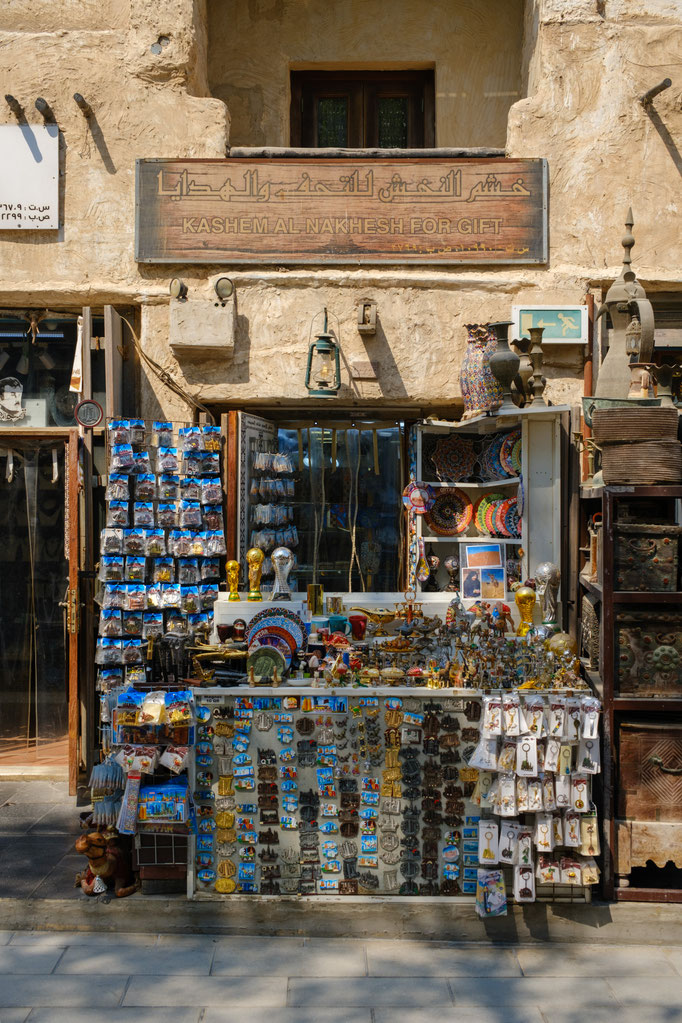
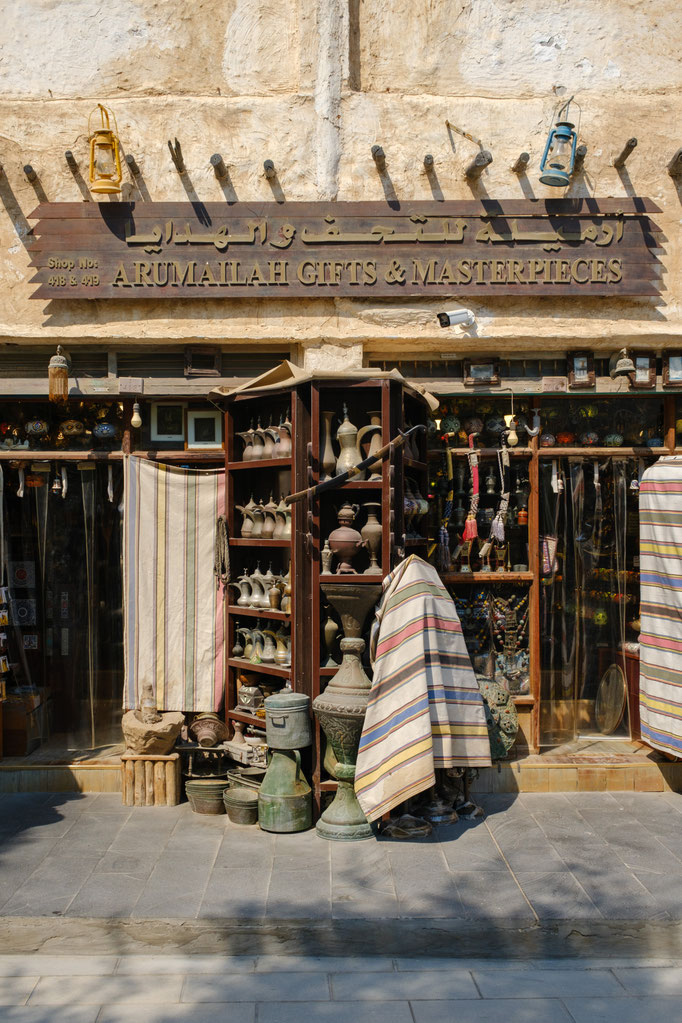
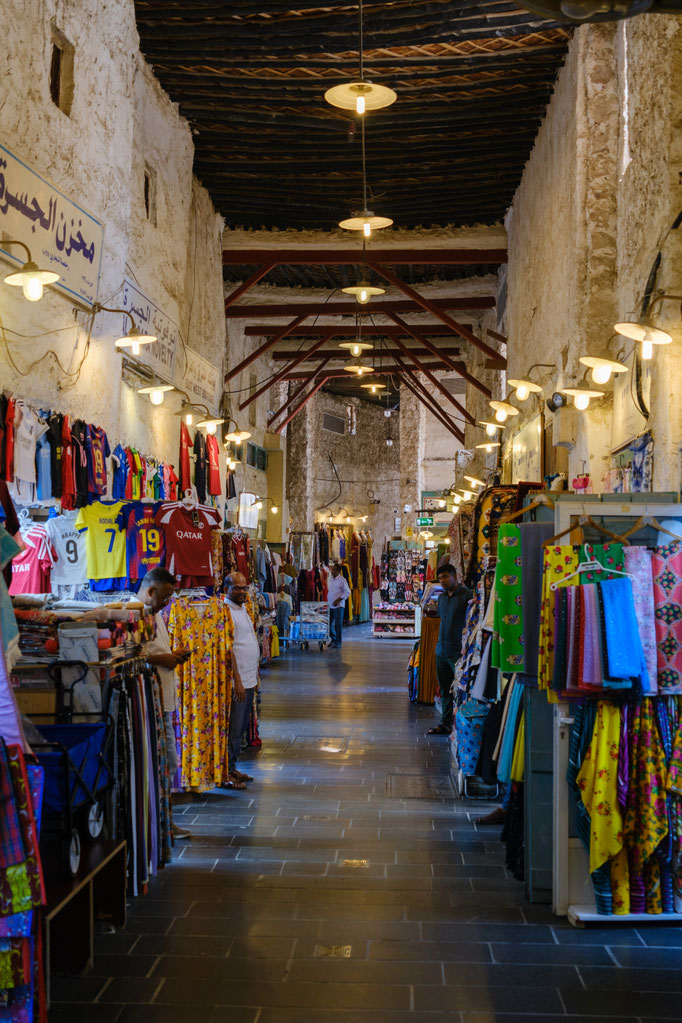
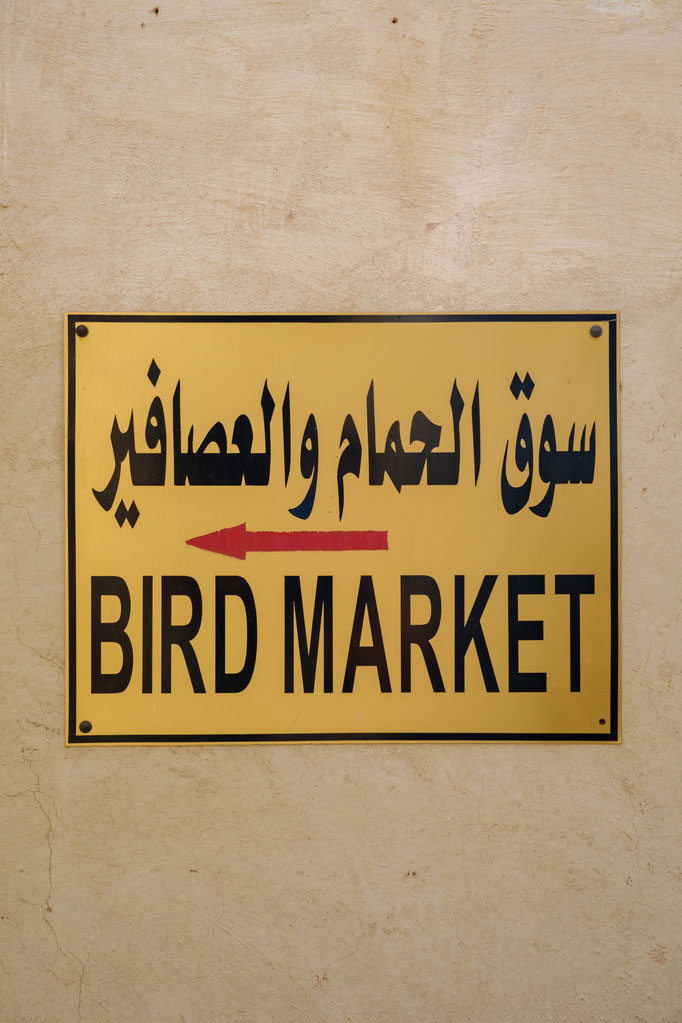
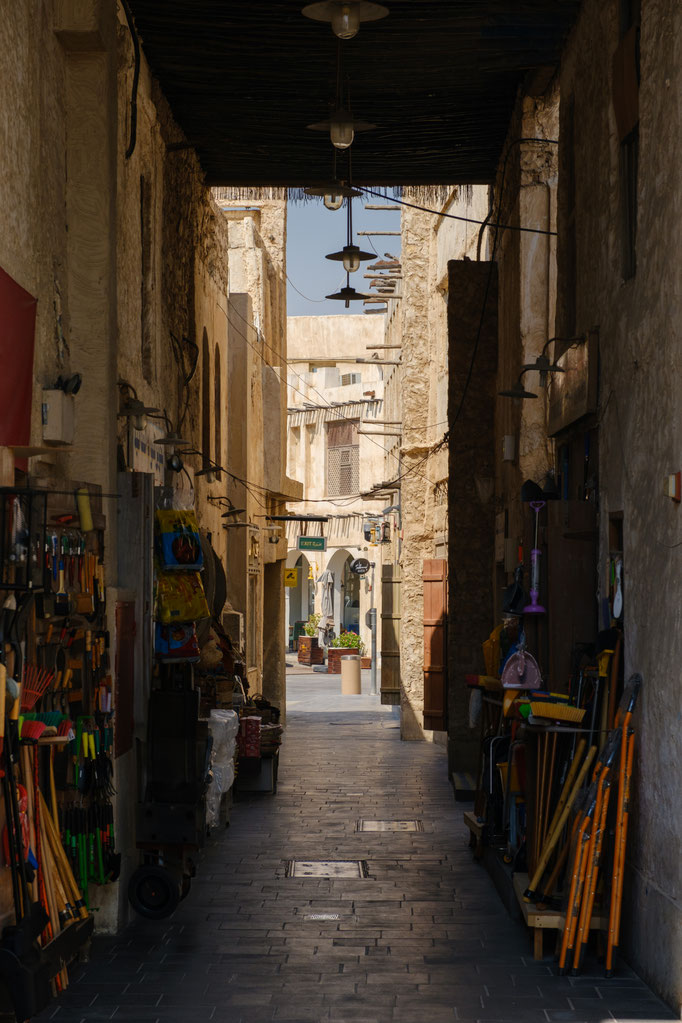
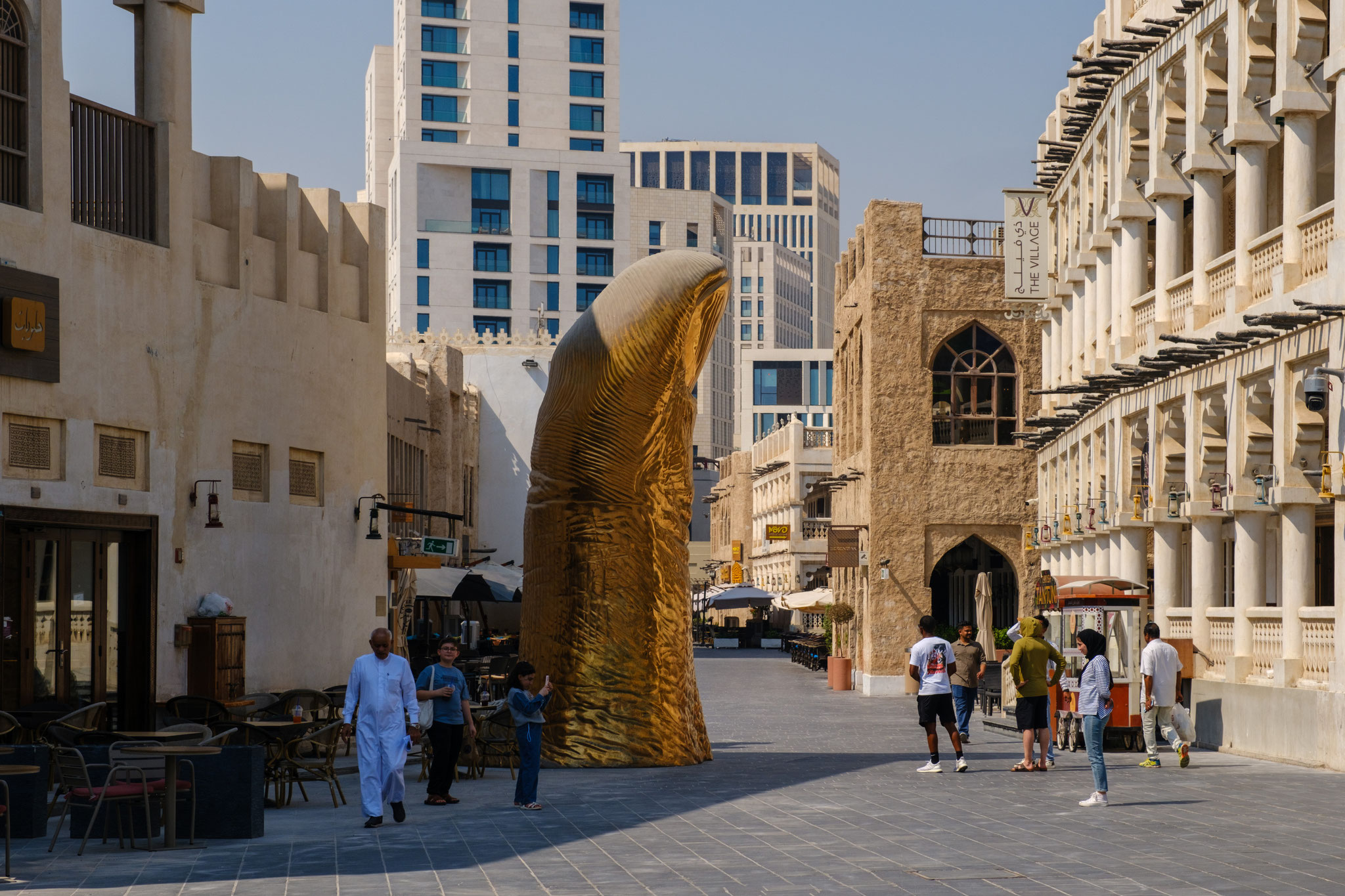
Our next stop was one of our favorites during the layover: Souq Waqif. From the moment we arrived, we were captivated by its beautiful architecture and the welcoming atmosphere. We wandered through the maze of narrow alleys, surrounded by spices, textiles, perfumes, traditional handicrafts, and colorful shops selling everything from souvenirs to household goods. There’s even a small bird market tucked away in one corner, though I (Thomas) wasn’t particularly fond of it! One of our highlights was the Souq Waqif Art Center, where beautiful lanterns and rotating art exhibitions added a modern touch to the traditional market. Just outside, the Golden Thumb Statue, an art piece by French artist César Baldaccini made of bronze with a gold patina, provided a great photo opportunity.
While exploring, we couldn’t resist buying some delicious dates, a true Qatari specialty. The souq is also home to the Falcon Hospital, which reflects Qatar’s deep connection to falconry. Falcons are highly prized in the country, symbolizing heritage, strength, and status, and the hospital provides medical care, training, and even sales of these majestic birds. Visiting Souq Waqif offered a vibrant blend of culture, commerce, art, and culinary delights, making it one of the most memorable stops of our short Doha layover.

Doha Corniche
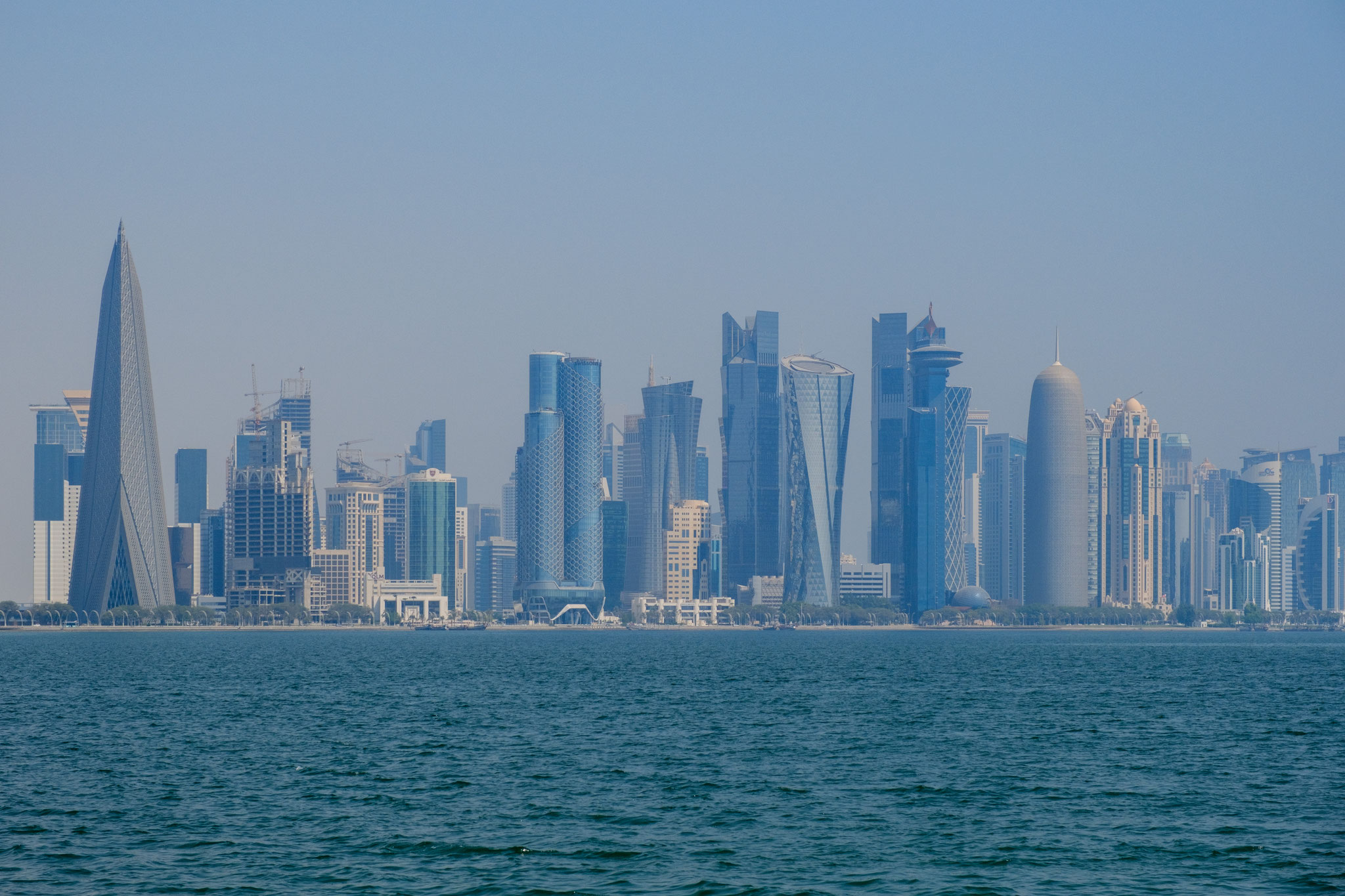
After exploring Souq Waqif, we continued our Doha layover tour and drove along the waterfront toward the Corniche. On the way, we passed in front of the Amiri (Prince’s) Palace, the official residence of Qatar’s Emir. It was fascinating to see this landmark, a symbol of the country’s monarchy and heritage, even if only from the outside. Driving along the bay, we admired the striking contrast between the palace’s traditional architecture and the gleaming modern skyline of Doha just across the water.
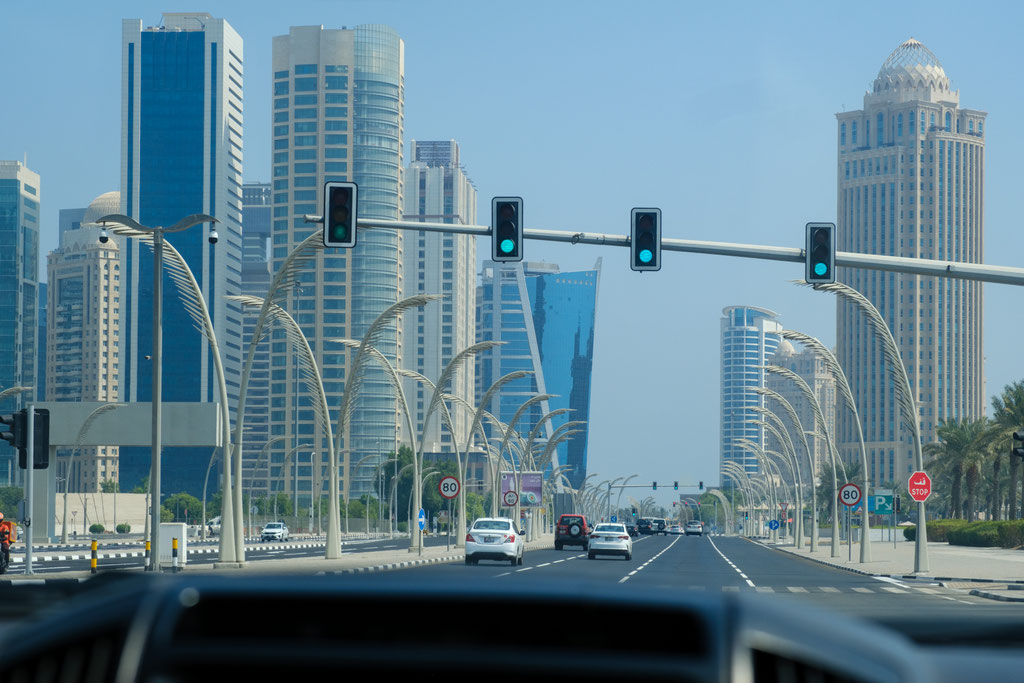
The Corniche itself is a beautiful 7-kilometer-long promenade stretching along Doha Bay, offering stunning views of the city’s skyscrapers and the serene waters of the Gulf. It’s a well-maintained, scenic area perfect for walking, jogging, or simply taking in the surroundings when the weather allows. During our visit, the extreme heat meant the promenade was almost empty, giving it an unusually quiet and calm atmosphere despite being such a popular spot. One detail that caught our eye was the street lamps along the Corniche, elegantly designed to resemble palm trees — a subtle reminder of Qatar’s desert heritage.



Katara Cultural Village
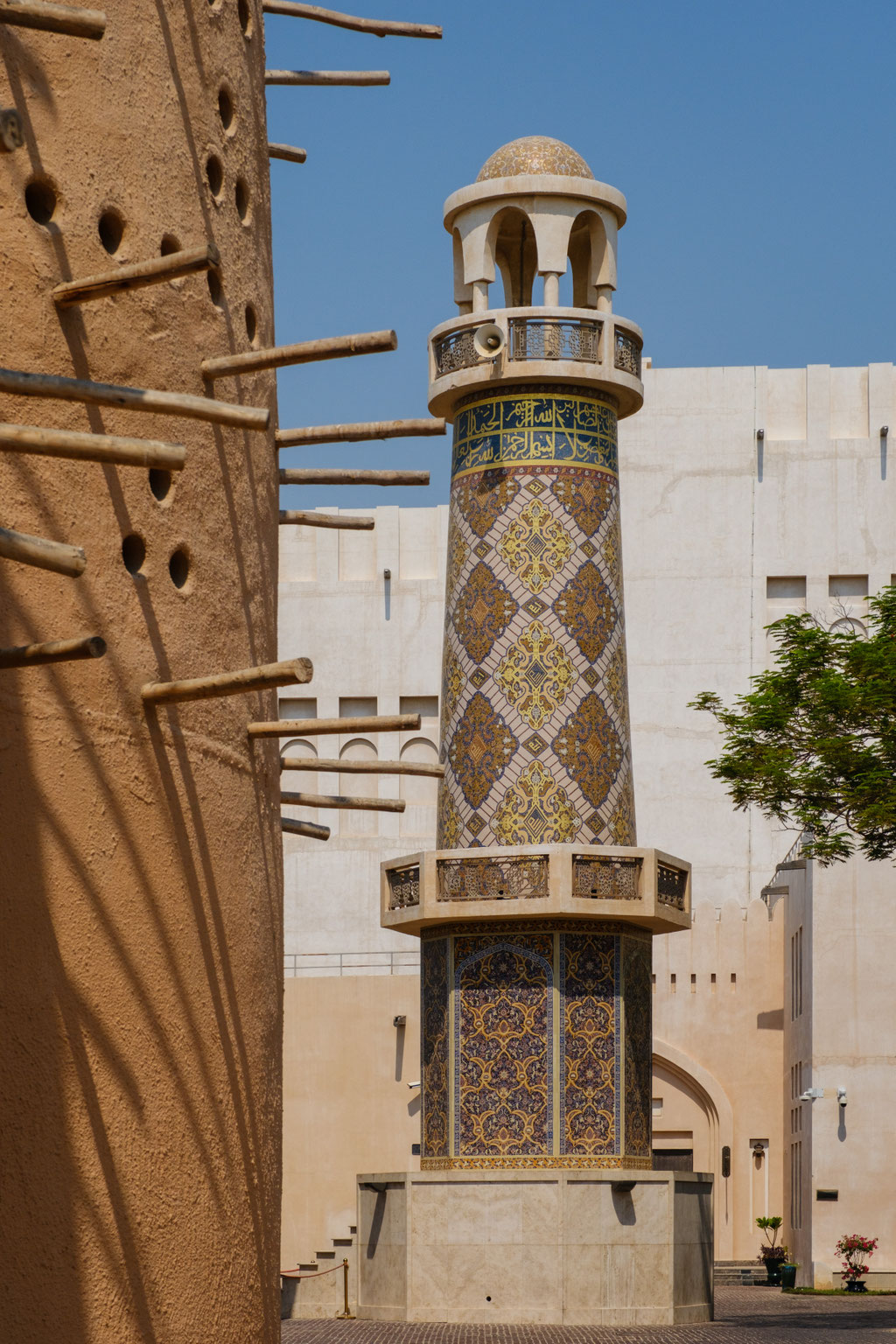
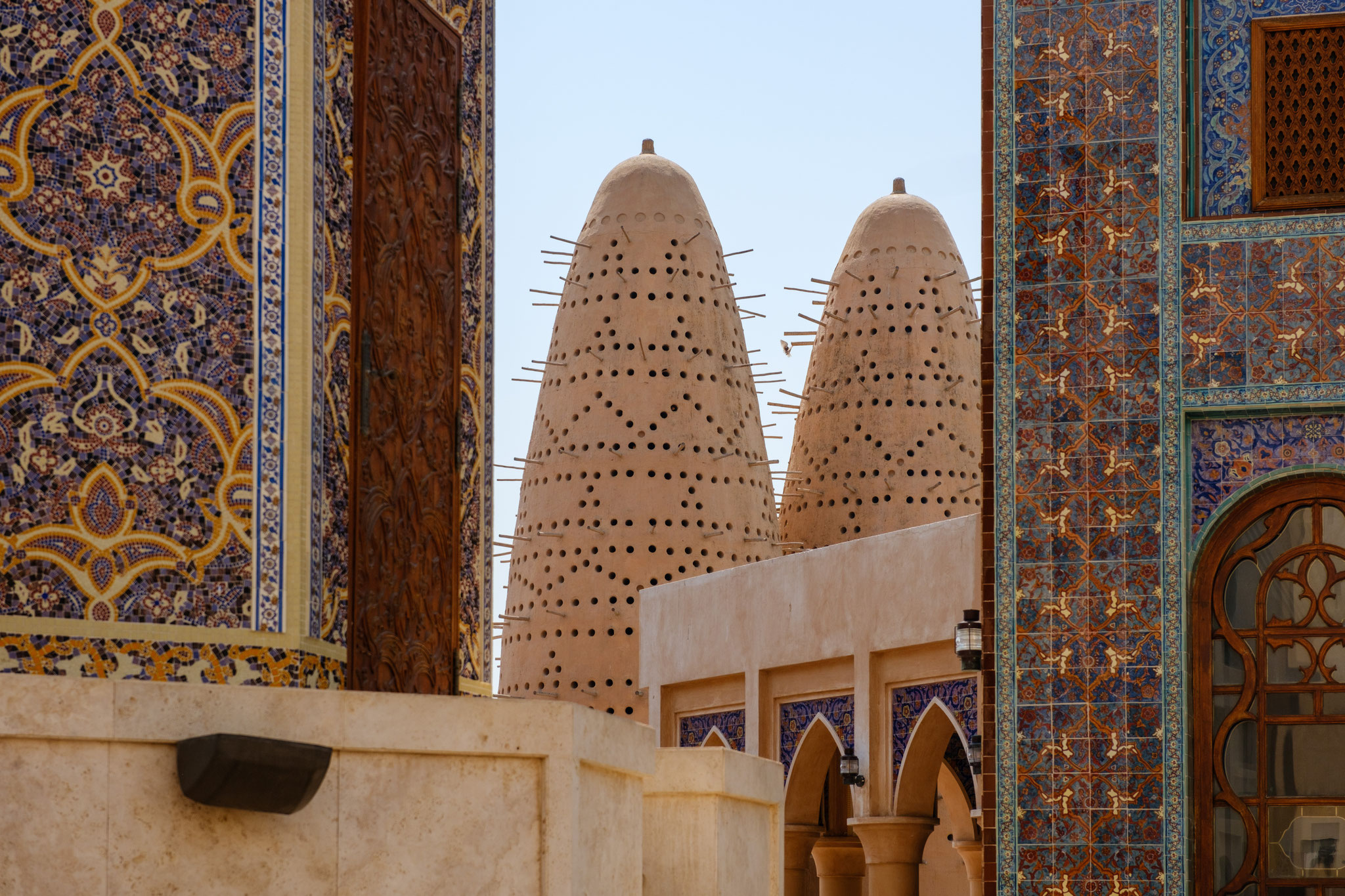
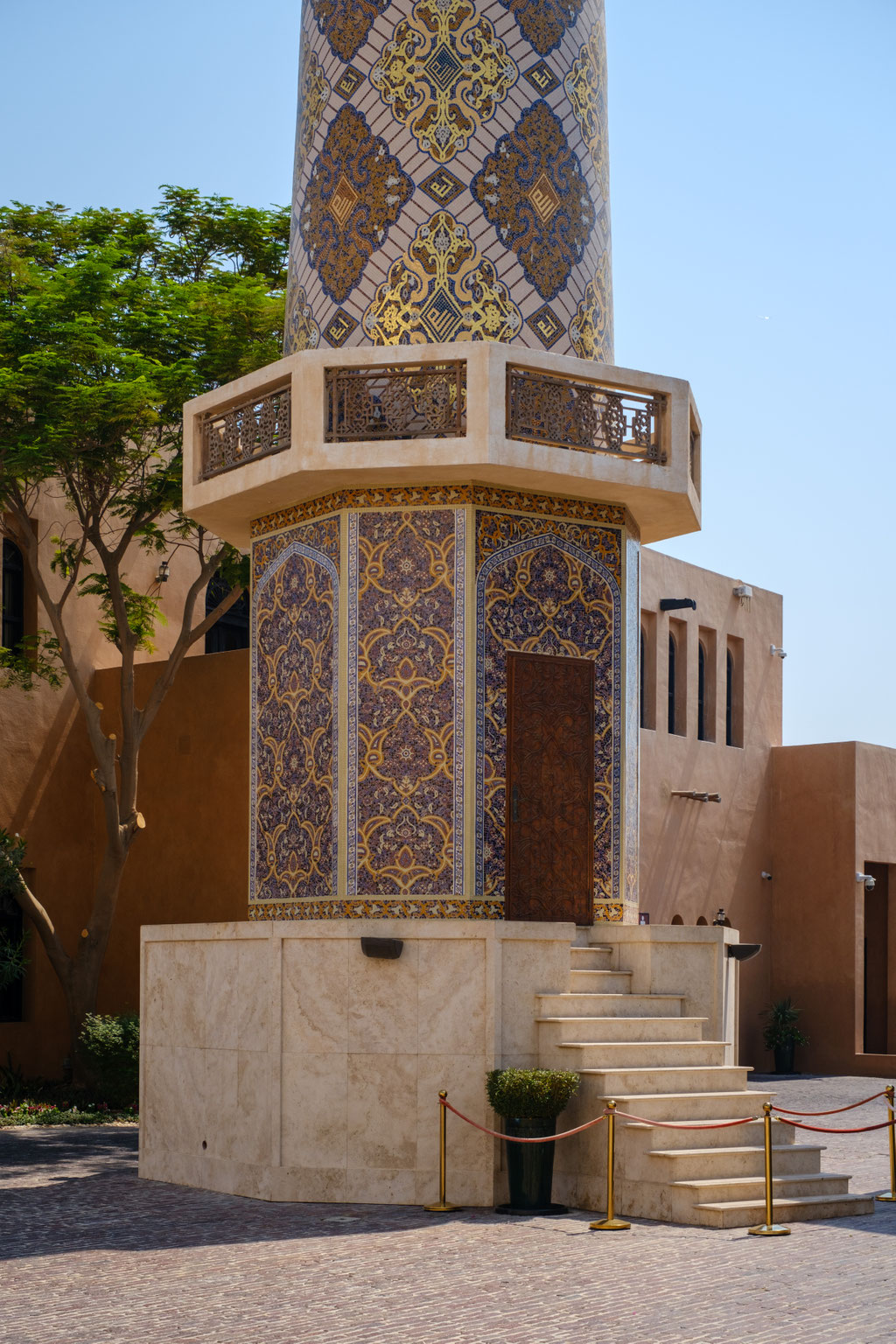
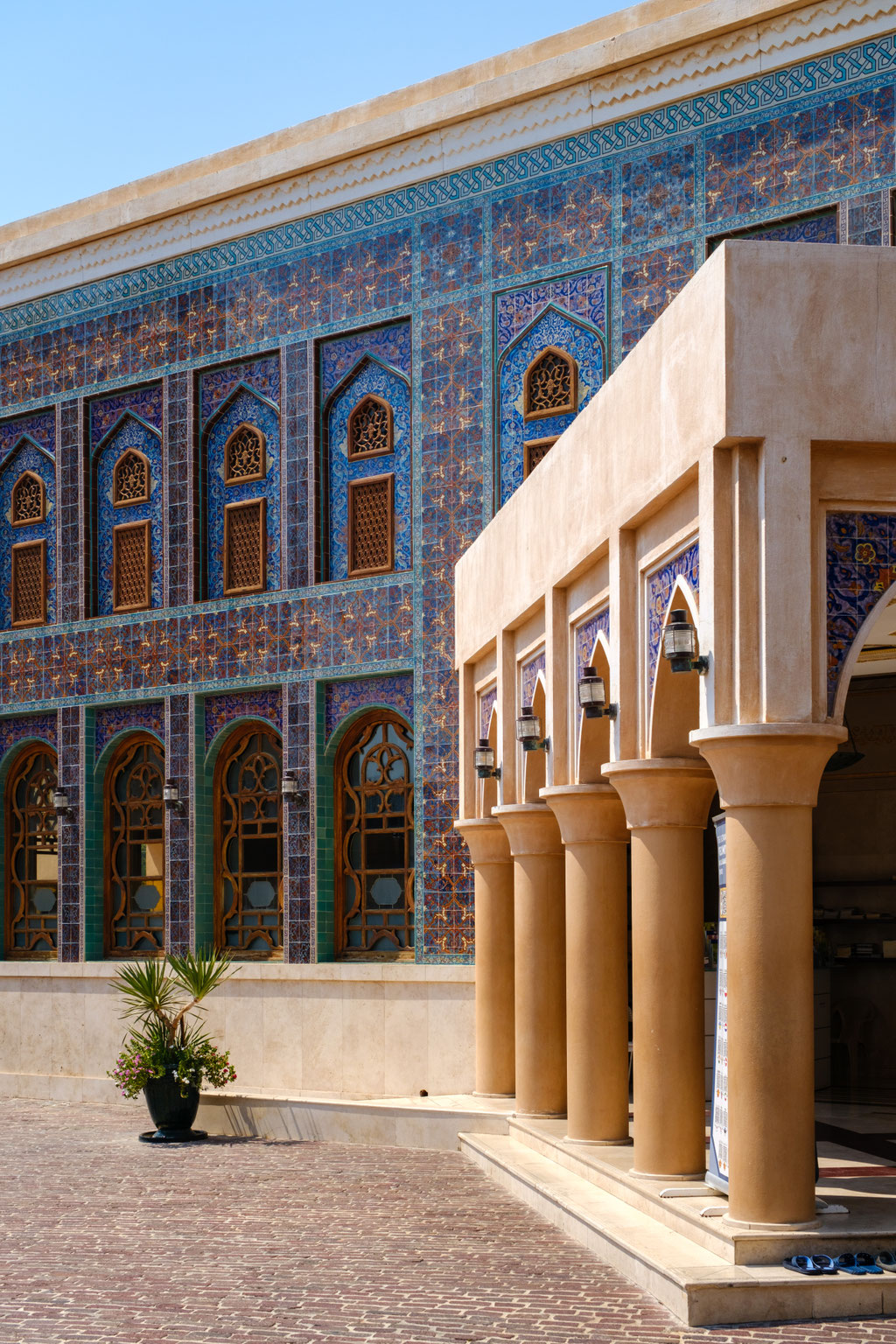
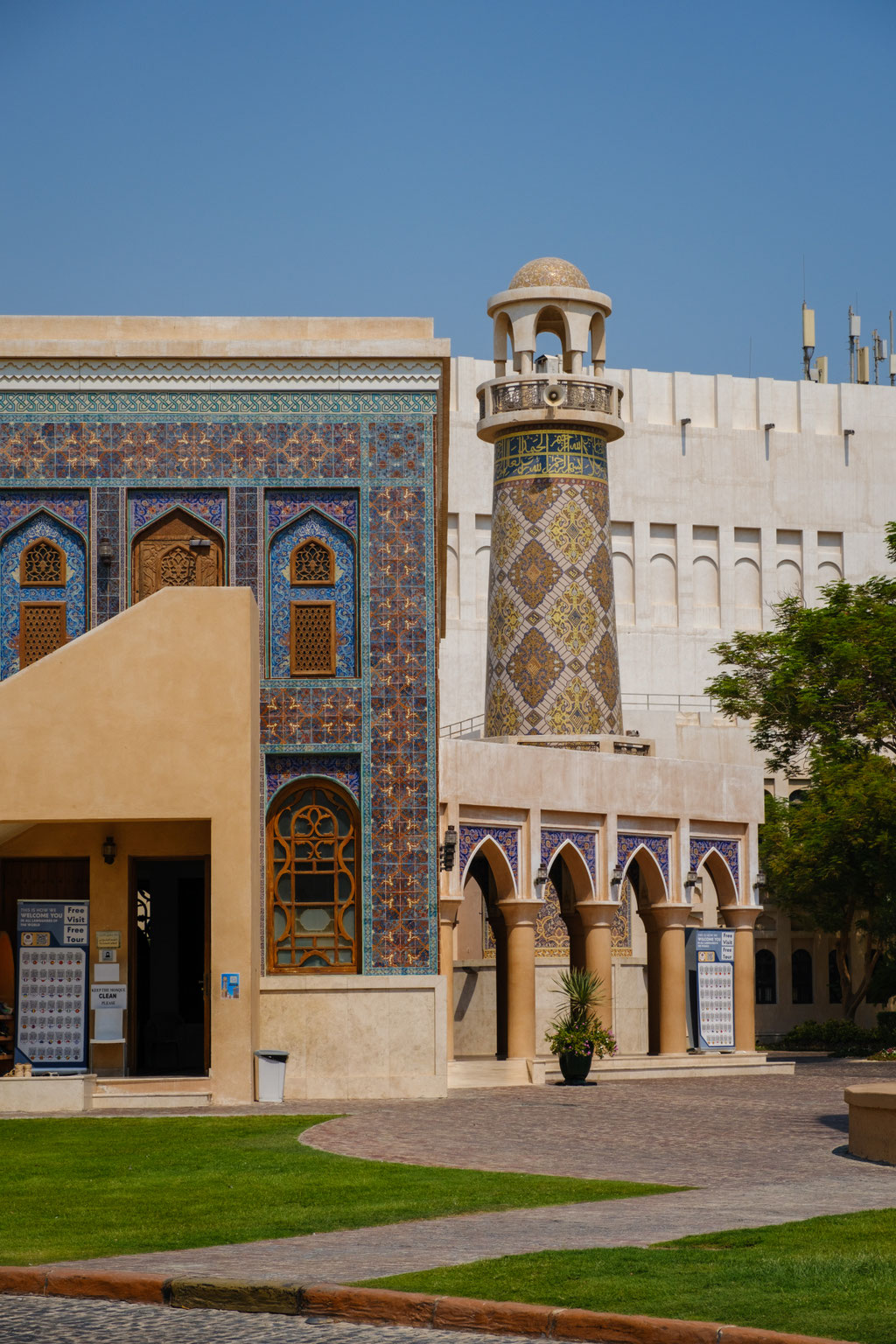
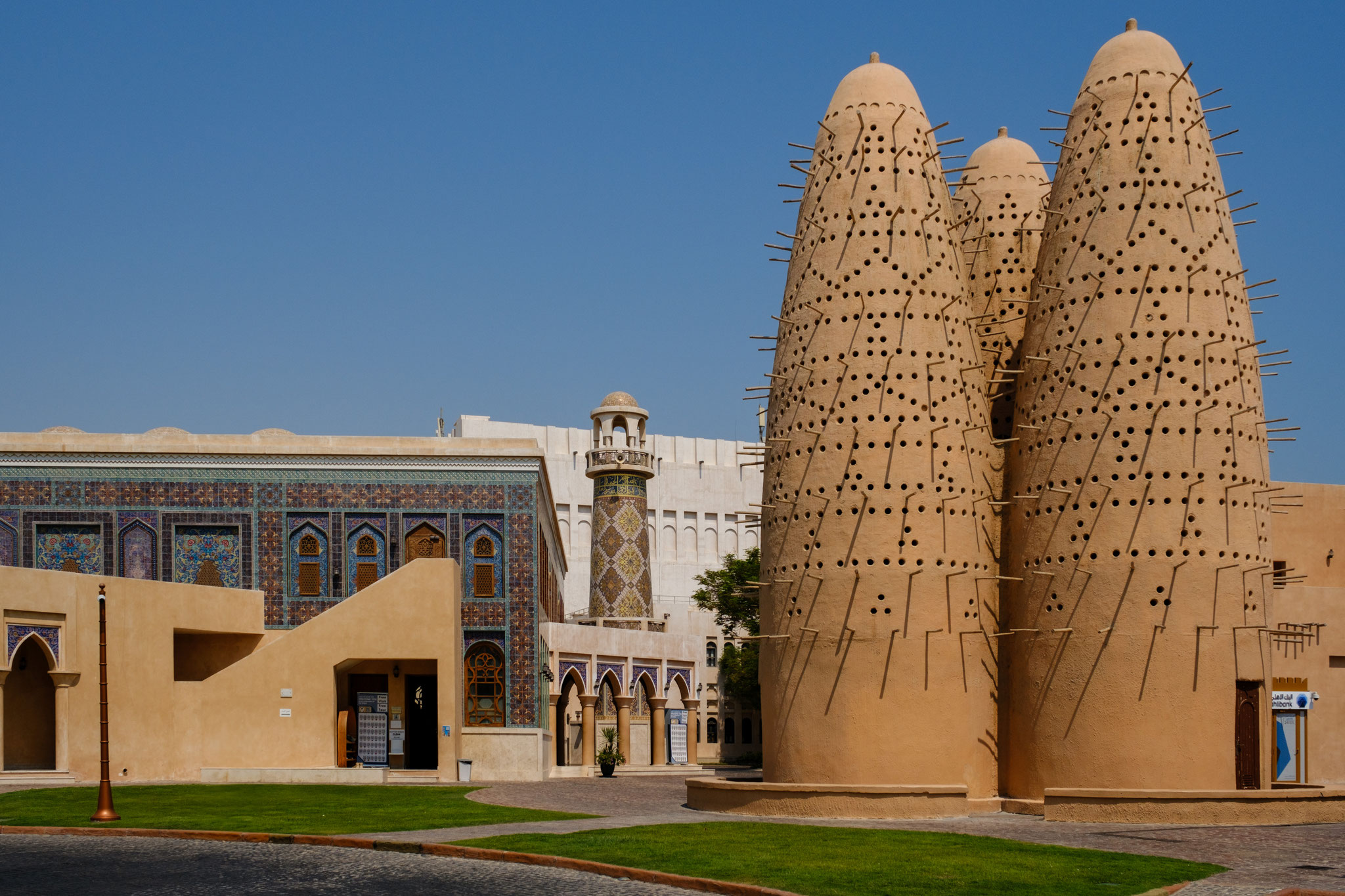
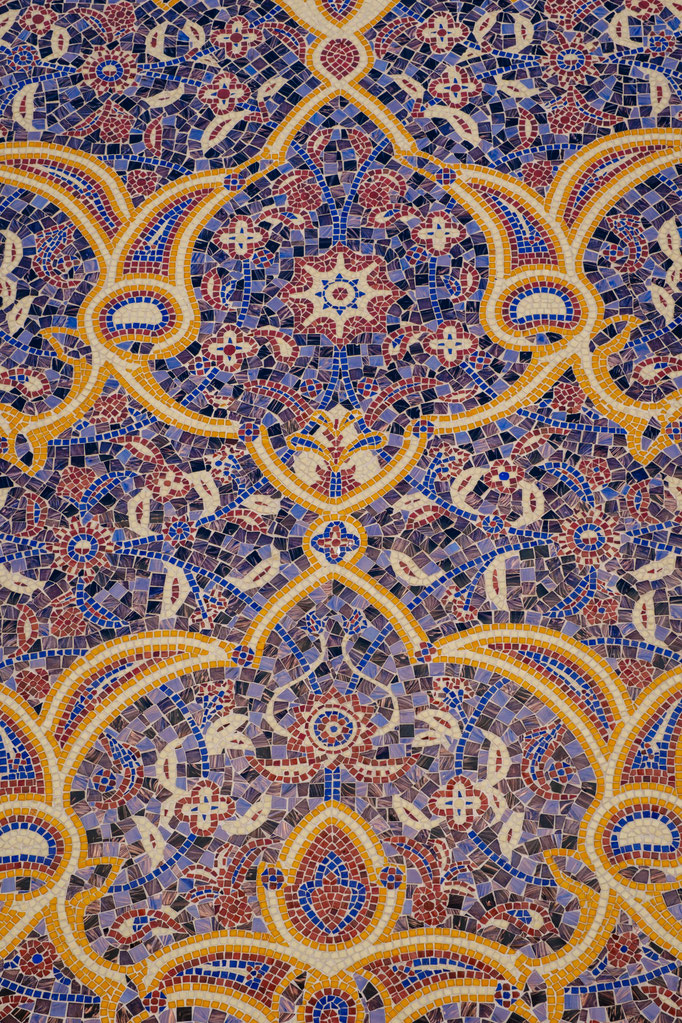
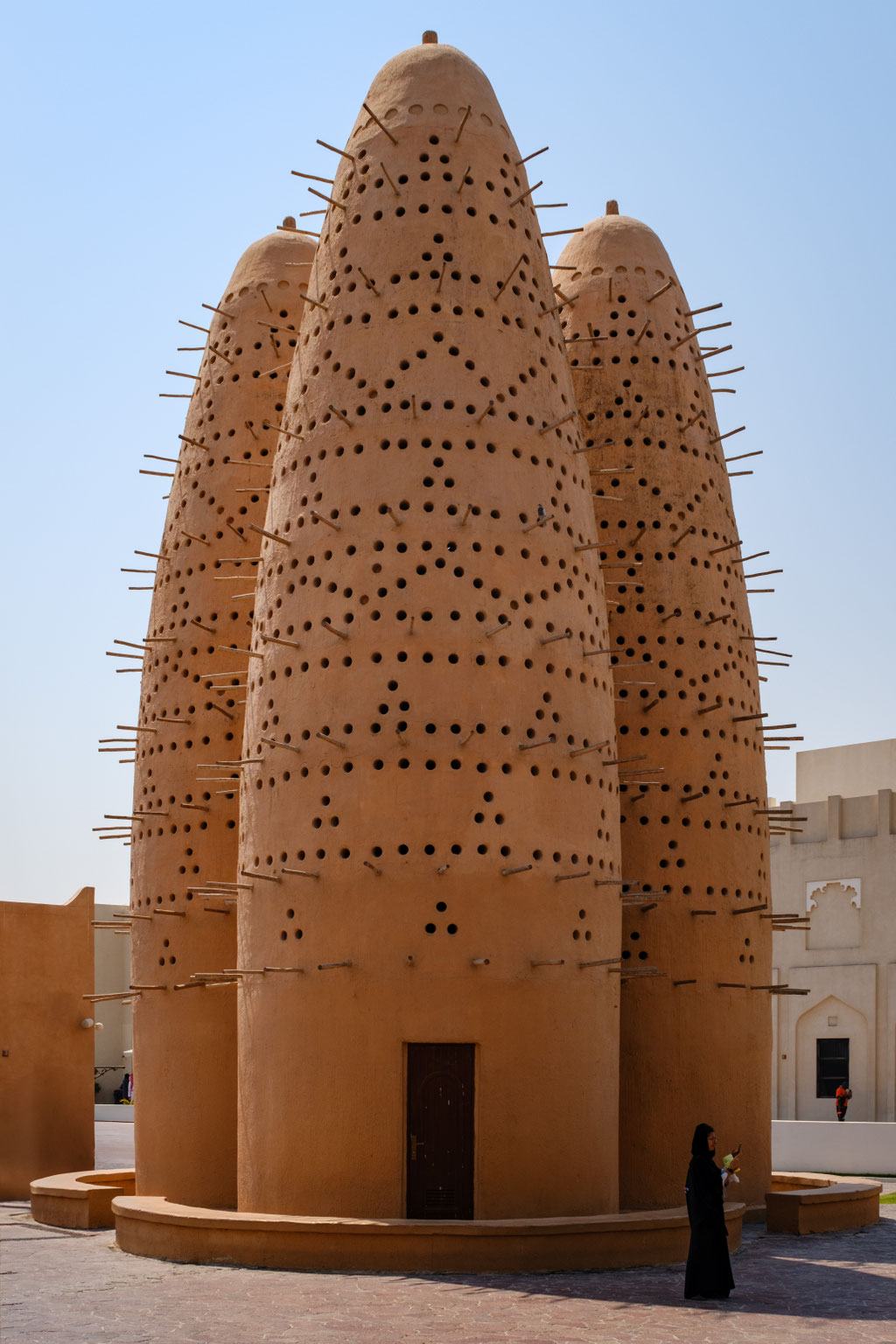
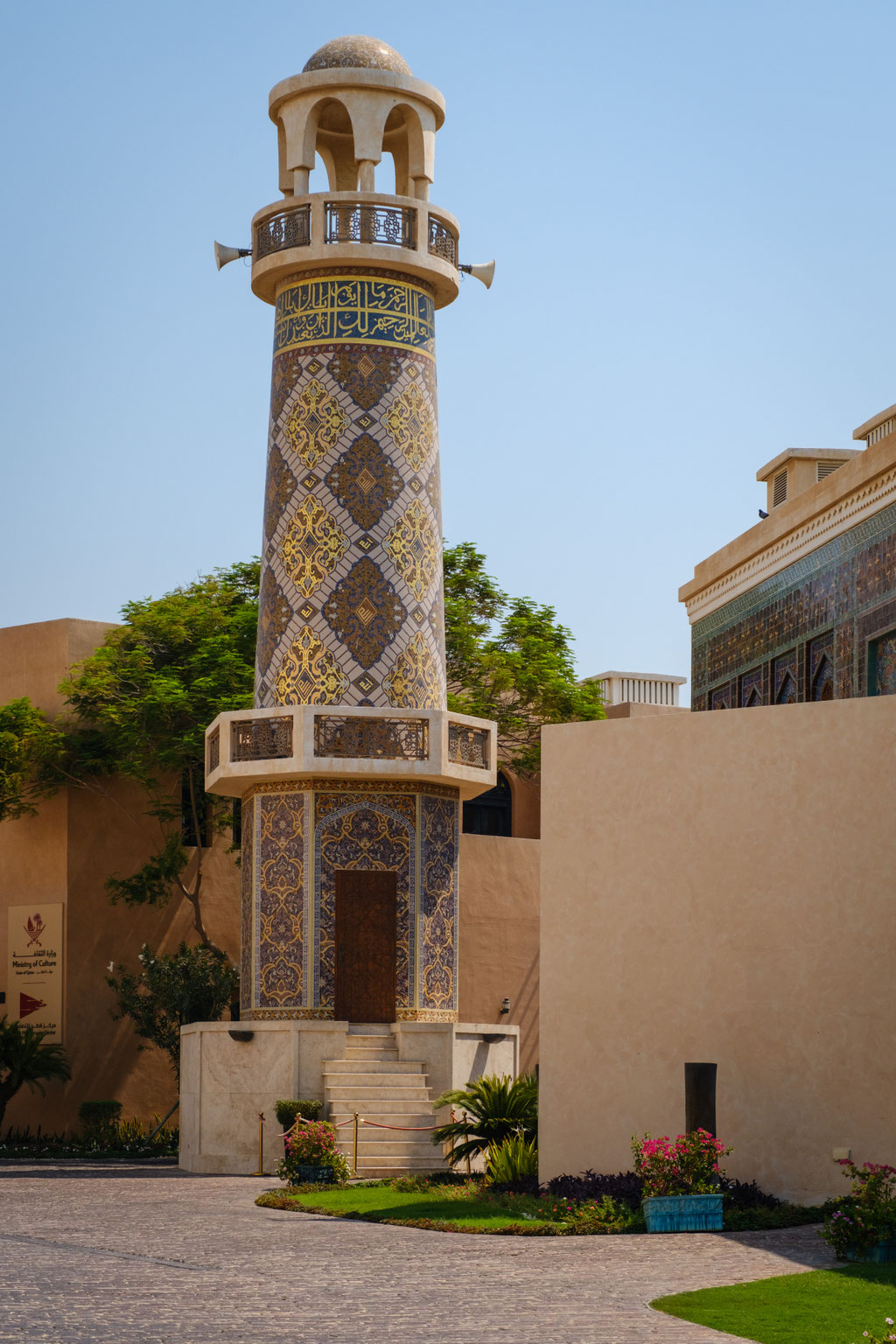
Our next stop was the beautiful Katara Cultural Village, a vibrant hub of art, culture, and architecture along the Doha coastline. We immediately wished we had more time to explore, as there was so much to see and experience. Walking around, we admired the impressive Katara Mosque, which stands out with its elegant white facade, intricate geometric patterns, and traditional Islamic arches. Its delicate minaret and striking exterior make it one of the most photogenic landmarks in the village. We also noticed the iconic pigeon towers scattered throughout the village — these ancient-style structures were historically used to house pigeons, reflecting Qatar’s connection to traditional architecture and its desert heritage.
Later, we discovered that the village also features an Amphitheatre and the Golden Masjid, but we didn’t know about them beforehand and unfortunately didn’t get a chance to visit. The entire area is full of charming streets, galleries, and open-air installations, but the intense heat quickly reminded us to retreat to the air-conditioned comfort of our 4x4. Even in the short time we spent there, Katara Cultural Village gave us a glimpse of Qatar’s dedication to preserving culture and celebrating art, making it another memorable stop on our layover tour.


21 High Street
After exploring Katara Cultural Village, our driver led us just a short drive away to 21 High Street, a spot we had heard about for its unusual feature: air-conditioned outdoor streets! Of course, we had to experience it ourselves! The cooling system works through discreet vents built into the ground, so you only feel the chilled air when standing directly on top of them — a clever (and very Doha) solution to the intense desert heat. It’s undeniably impressive, though it also made us reflect on how energy-intensive such innovations must be, especially in a region already facing the effects of rising temperatures.
The area is stylish and modern, lined with high-end boutiques — including a Galeries Lafayette — as well as cafés and beautifully designed storefronts. It feels like a luxury open-air shopping district, just with a Doha twist. Because of the extreme temperatures, the street was almost completely empty during our visit, giving the whole place a surreal, movie-set atmosphere. We didn’t stay long, but testing out this cooled outdoor boulevard was a great stop that captured Doha’s mix of luxury, innovation, and comfort.



The Pearl Island
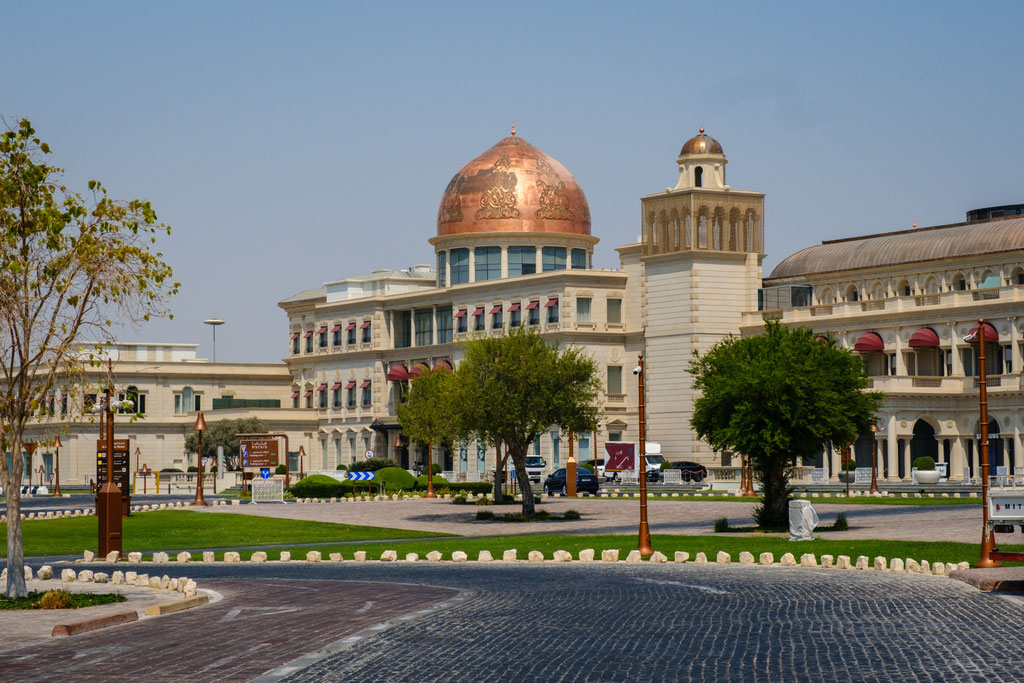
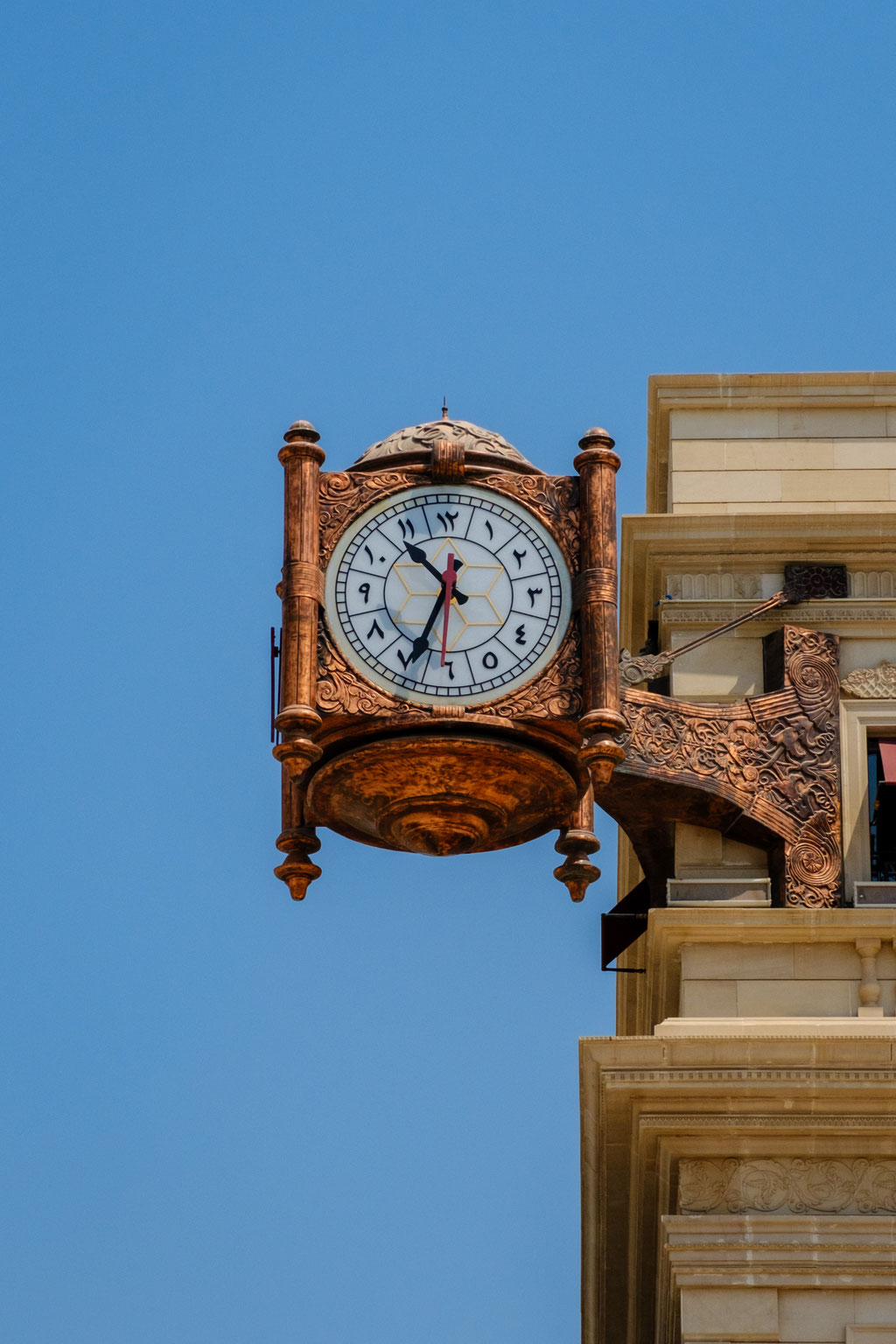
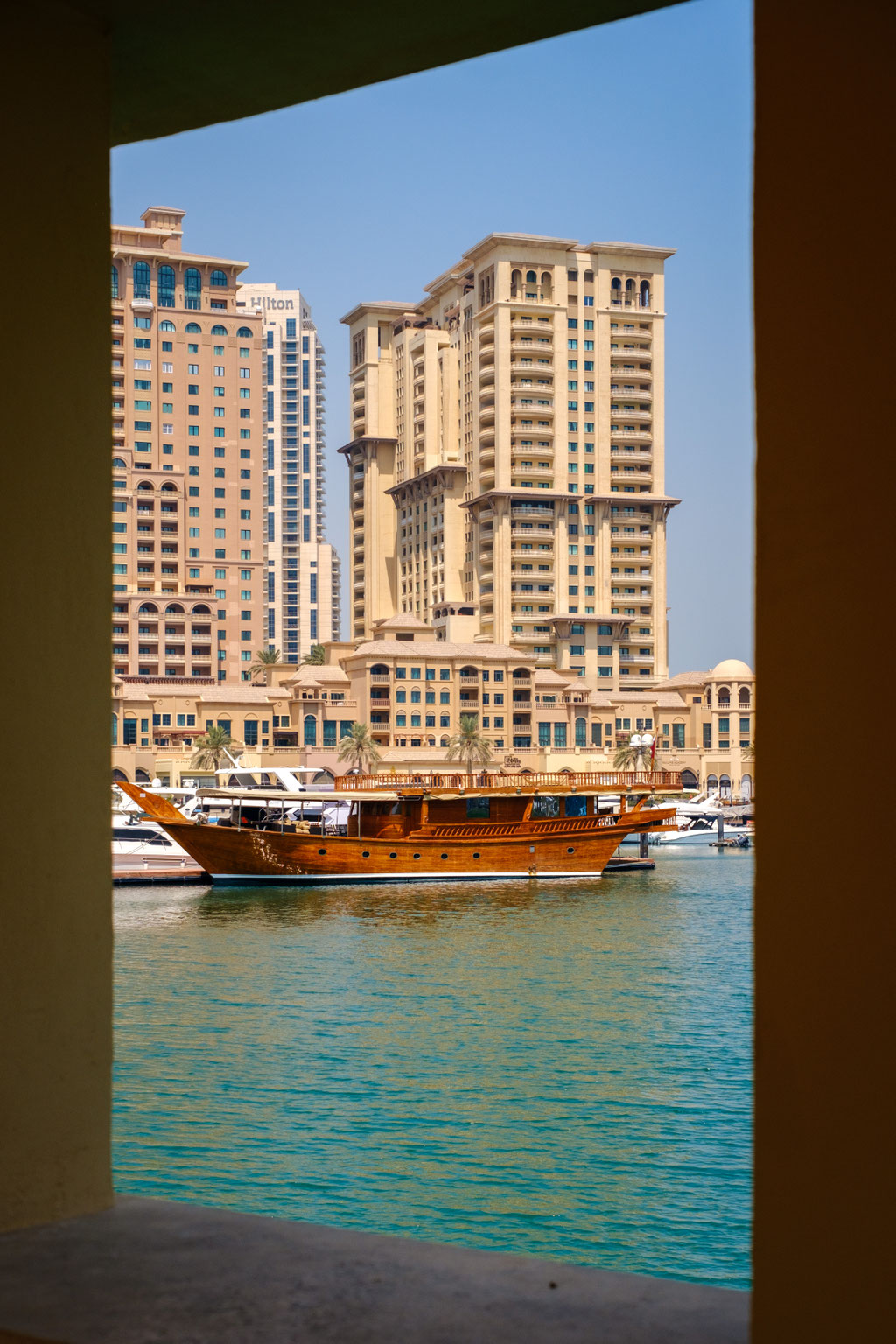
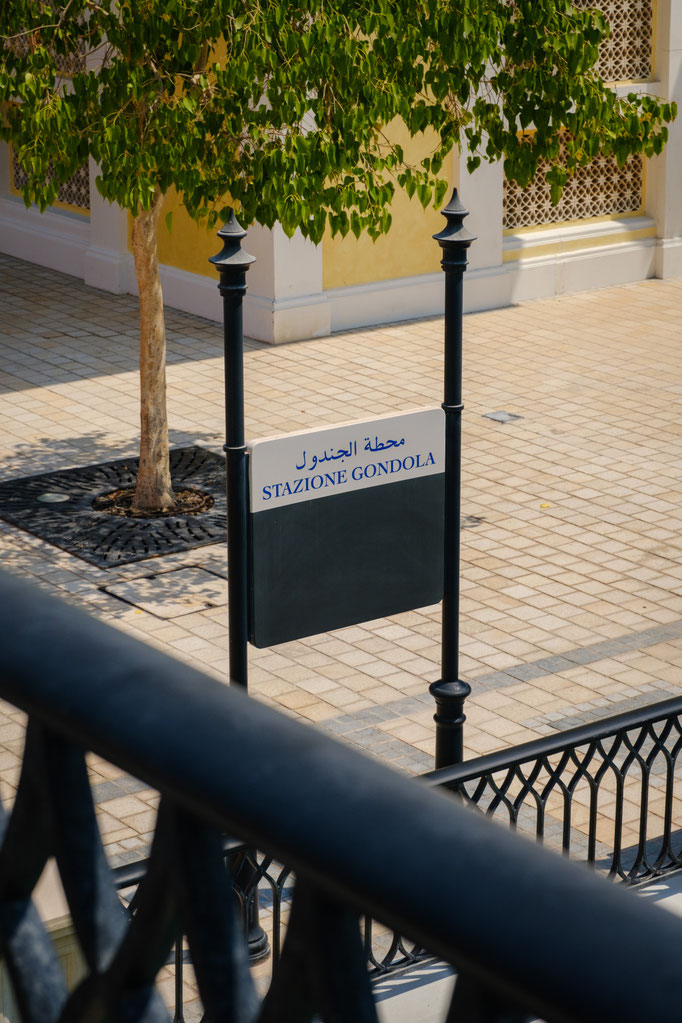
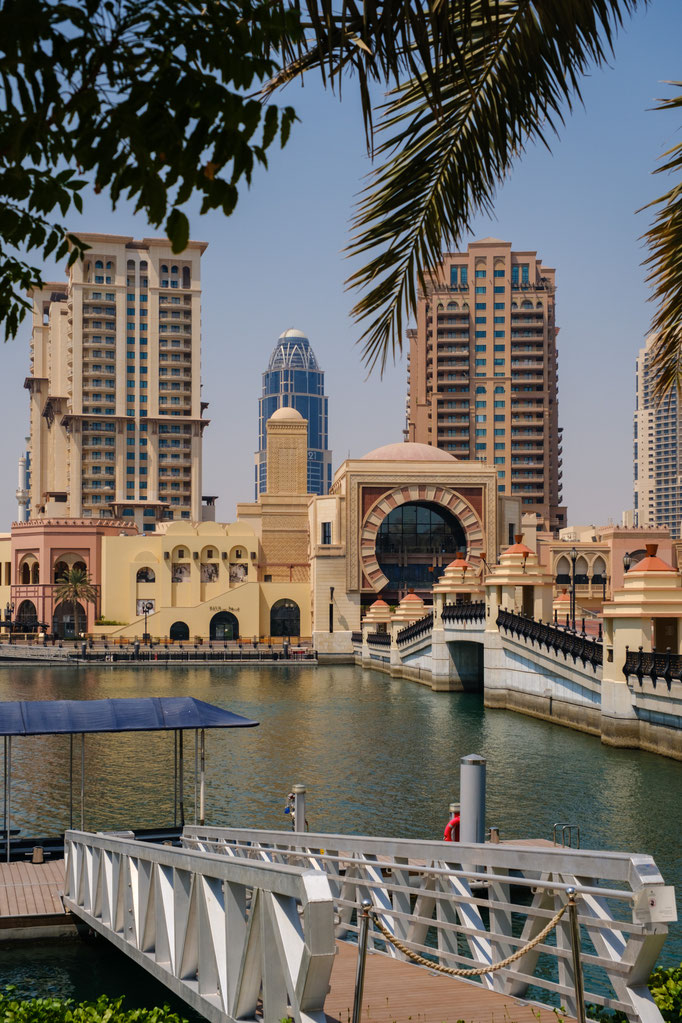
Our next stop was The Pearl, a stunning man-made island known for its luxury residences, marinas, and vibrant waterfront. We headed to the Qanat neighborhood, wandering briefly through its charming streets and taking in the stylish architecture. The entire neighborhood has a distinctly Venetian feel, with colorful buildings adorned with curtains, narrow streets, and canals that create a picturesque atmosphere. One of the highlights was the Rialto Bridge replica, a playful touch that perfectly fits the Venetian theme and made for photo opportunities.
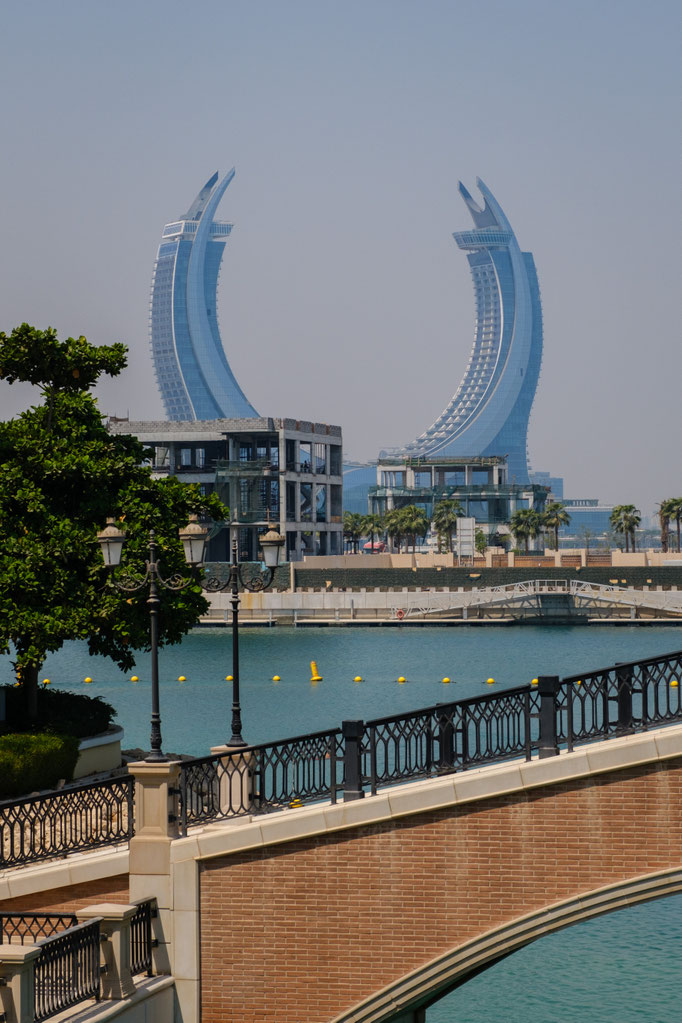
From a distance, we could also admire the modern Moon Tower rising above the skyline, a striking contrast to the European-inspired streets of the Qanat neighborhood. We quickly realized there was so much more to explore — including the Crystal Walk, an attraction we unfortunately didn’t have time to visit. This was our last stop in Doha city, and even in a short visit, The Pearl offered a glimpse into the luxurious and modern side of the capital, making it a great way to end our city exploration before heading out to the desert.




Desert Camel Camp
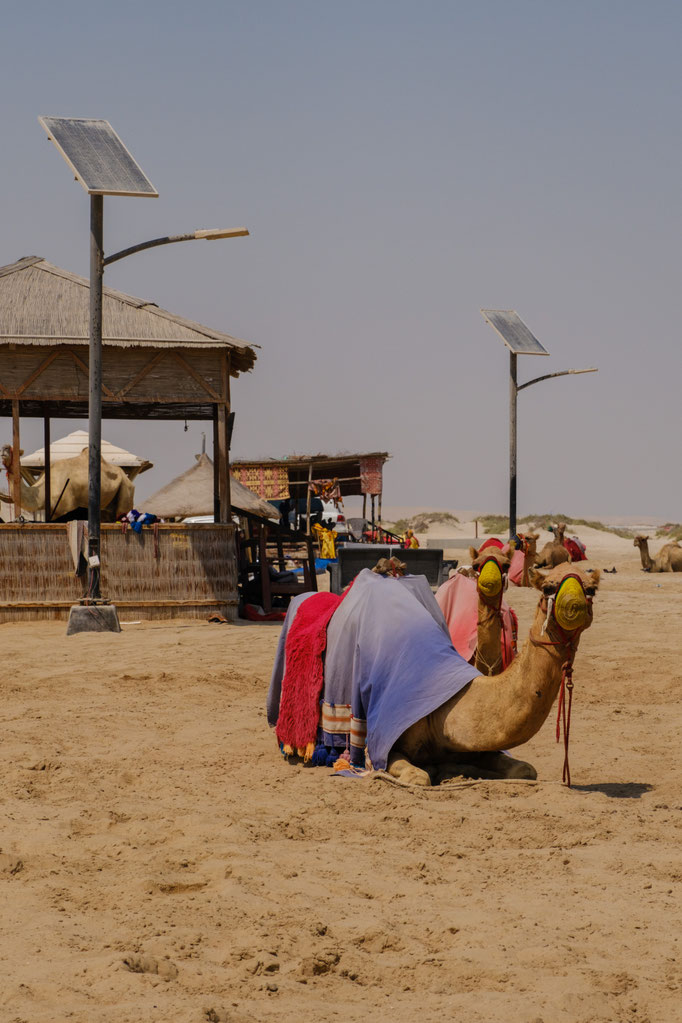
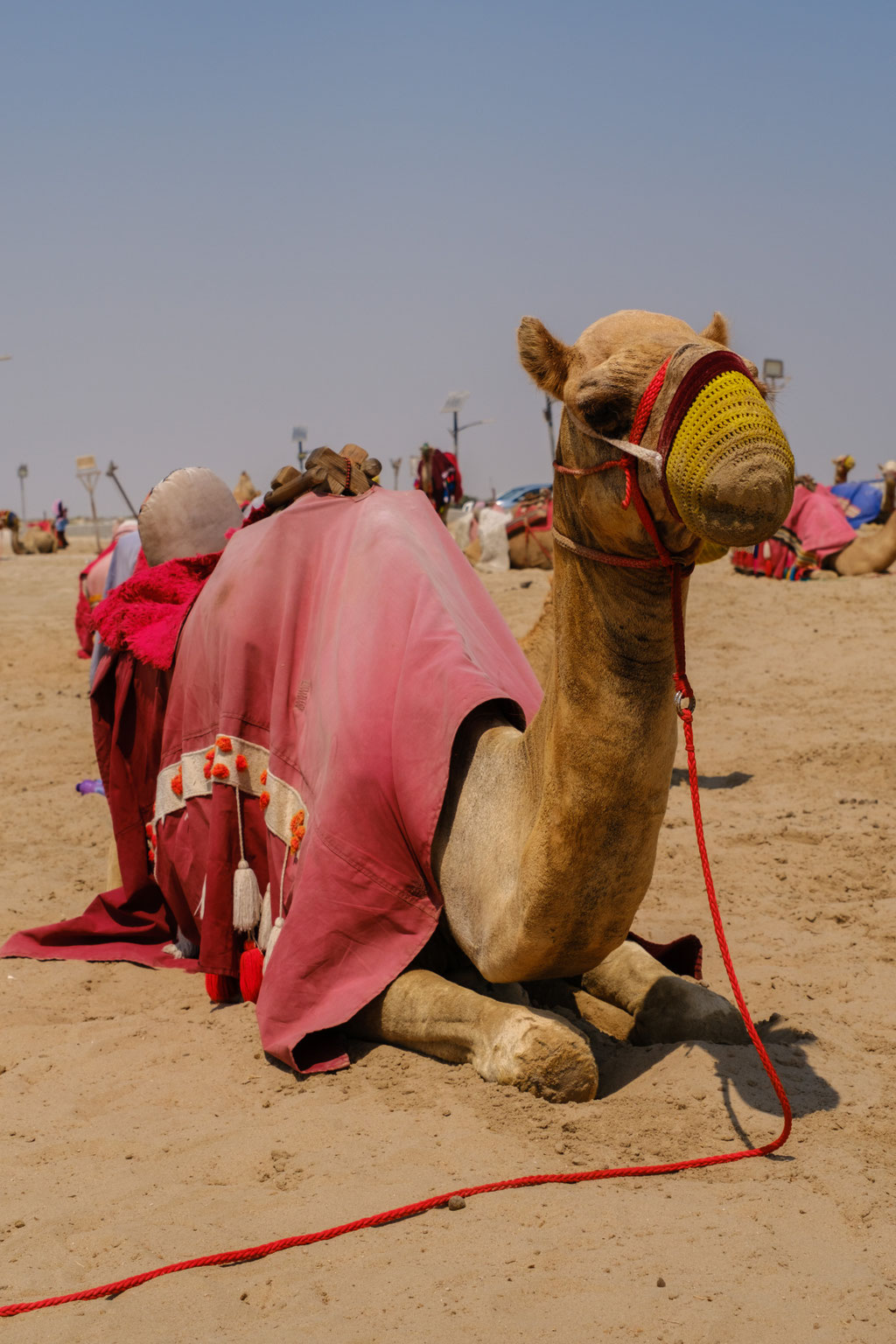
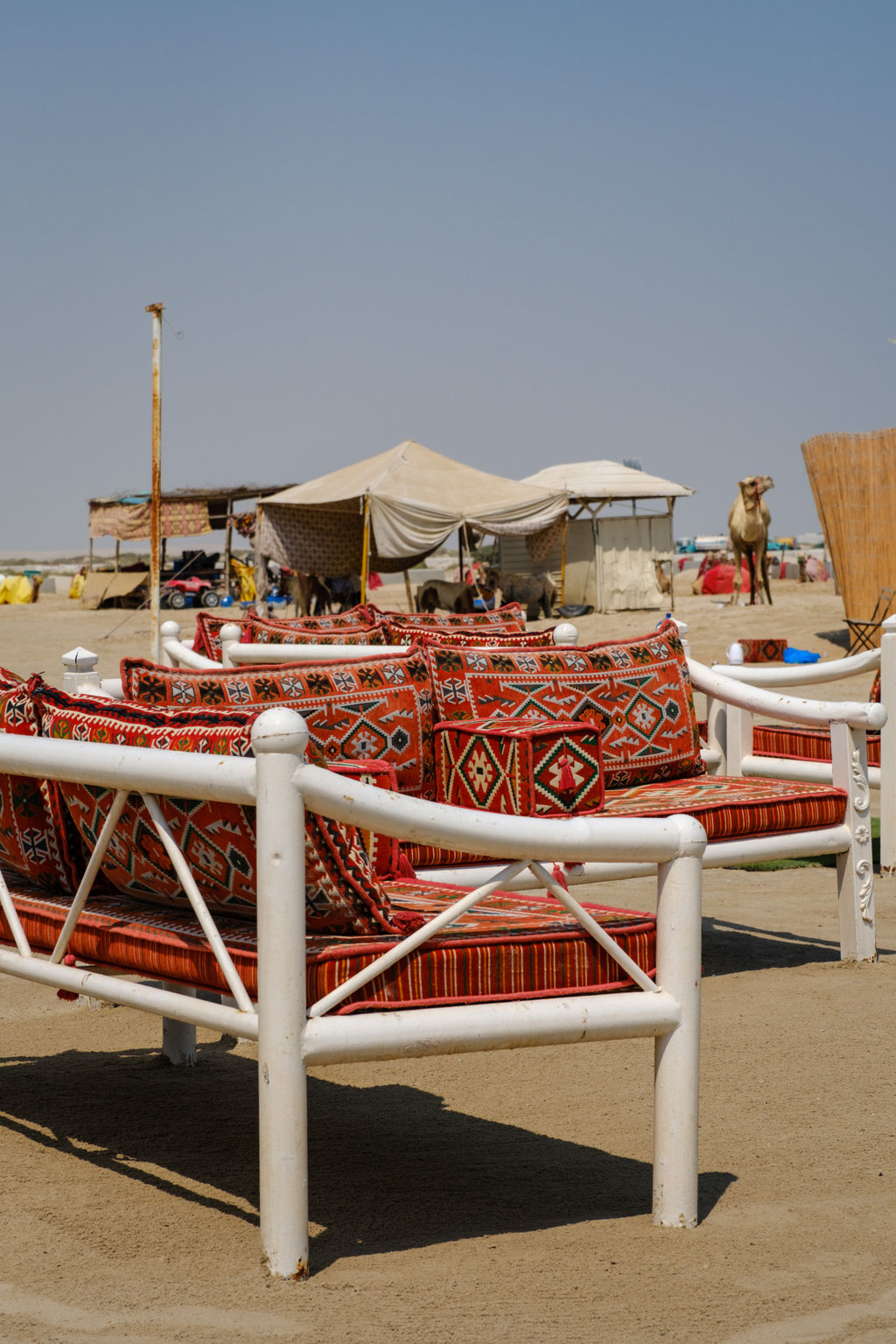
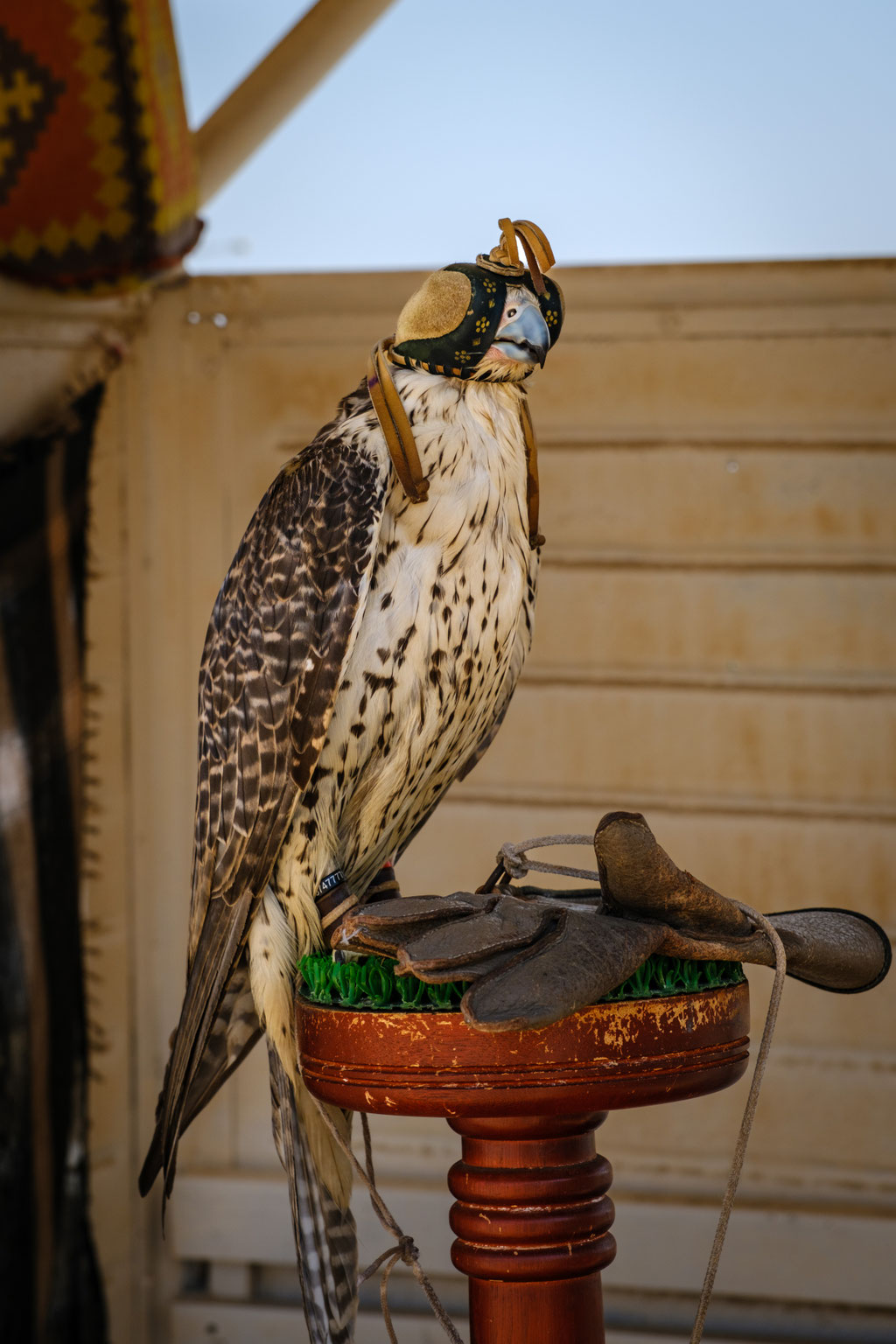
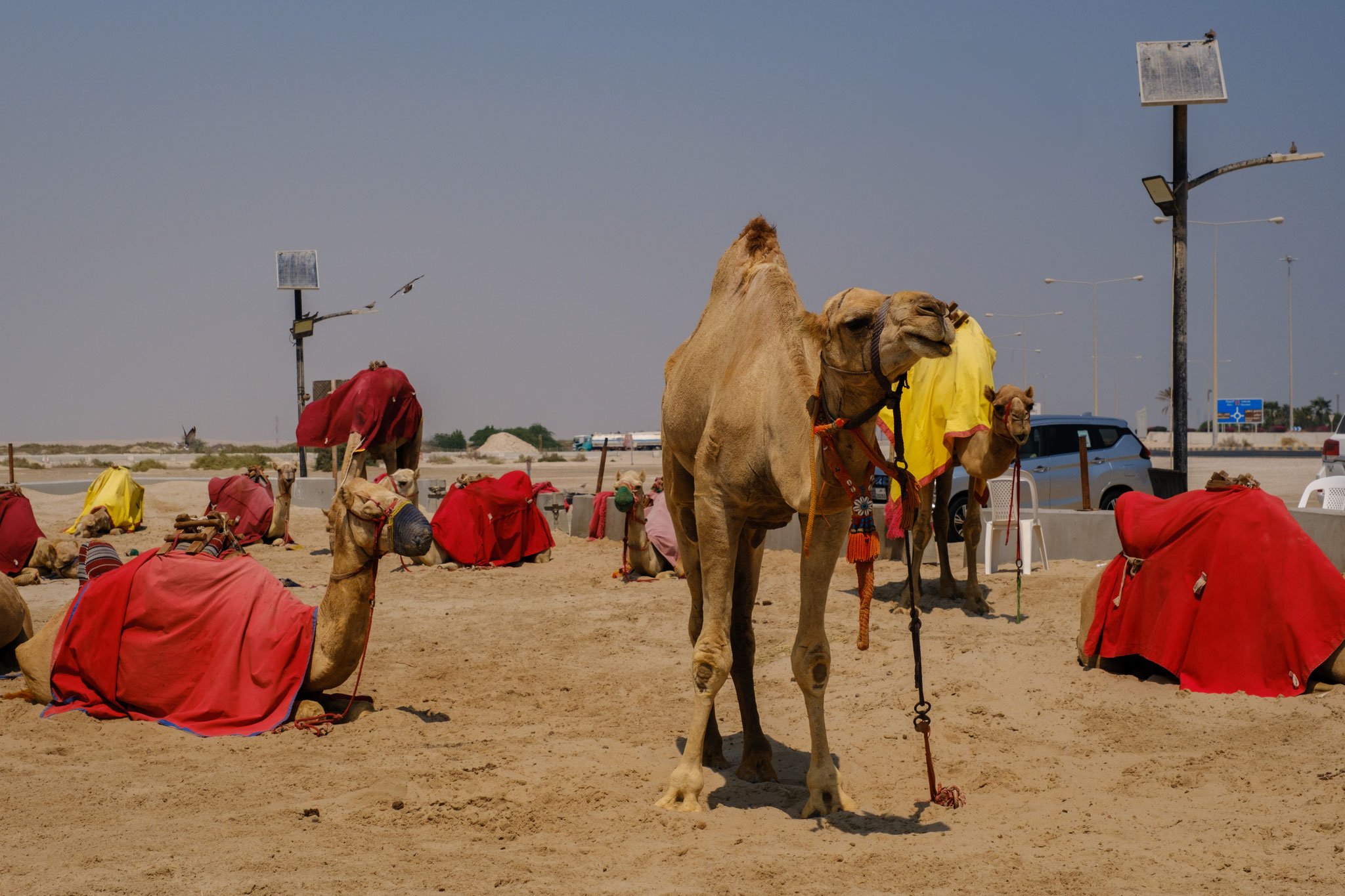
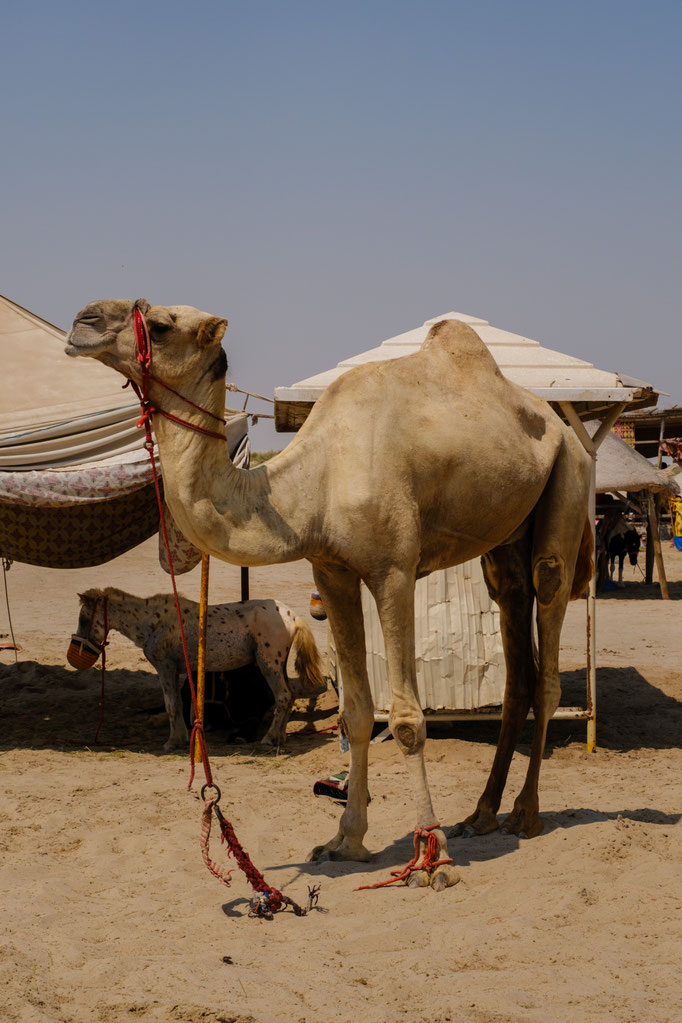
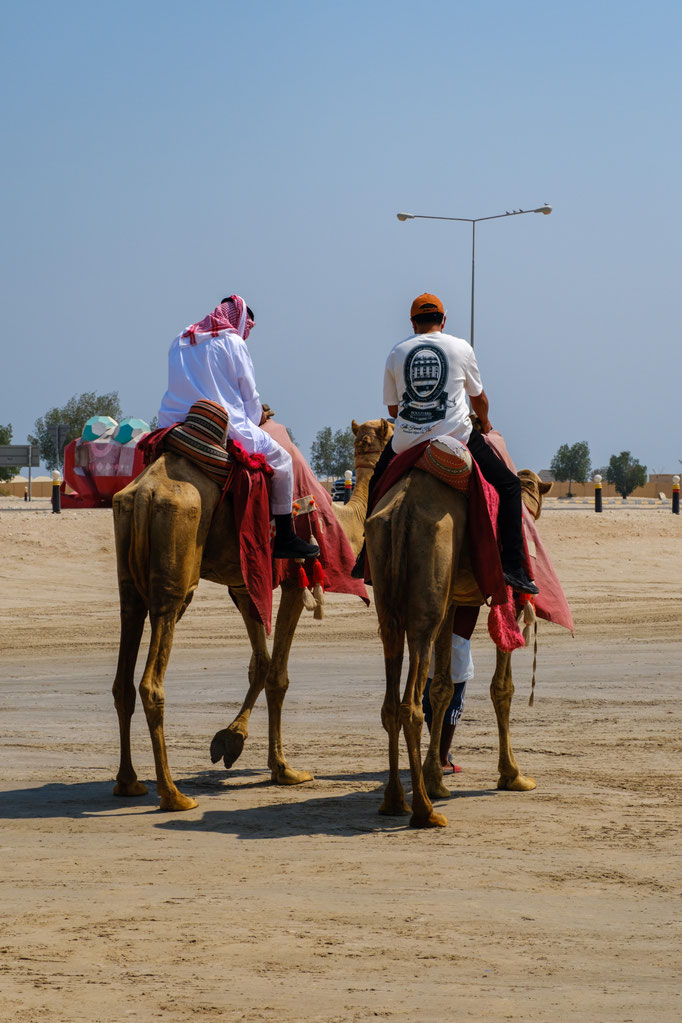
After finishing our city tour, we headed out toward the desert. Qatar is a relatively small and flat country, so it didn’t take long to leave the skyline behind. Along the way, we could see petroleum facilities and even passed in front of the impressive FIFA World Cup Stadium. Our first desert stop was at the edge of the sands, where camels and falcons were on display. The setup felt a bit touristy, and while one of the other passengers decided to take a short camel ride, we opted to simply stop and take photos. Having already experienced camel riding in the Sahara Desert in Morocco, we were content to enjoy the scene and capture the moment. The desert atmosphere, combined with these traditional animals, provided a striking contrast to the modernity of Doha we had just explored.


Inland Sea
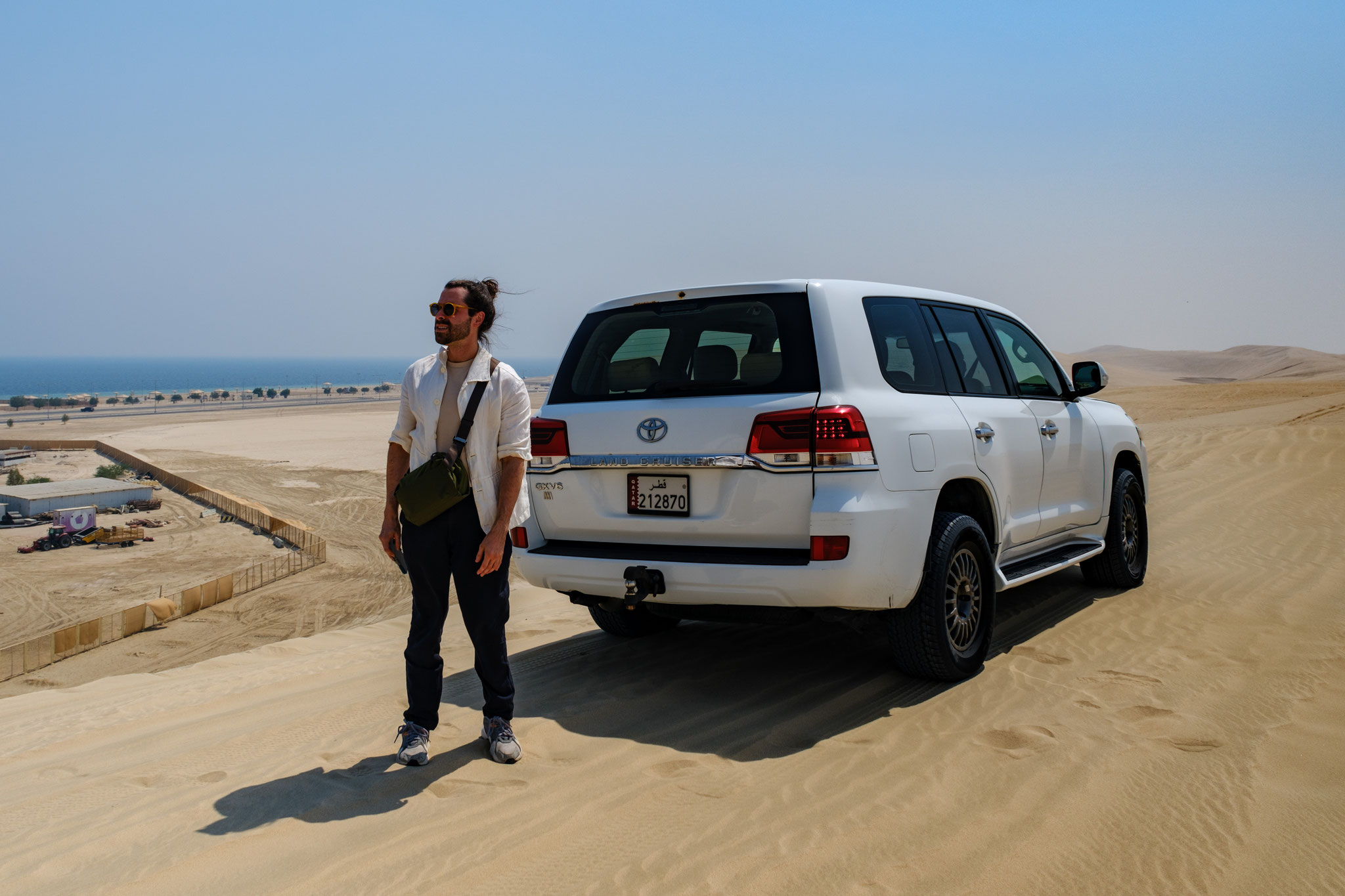
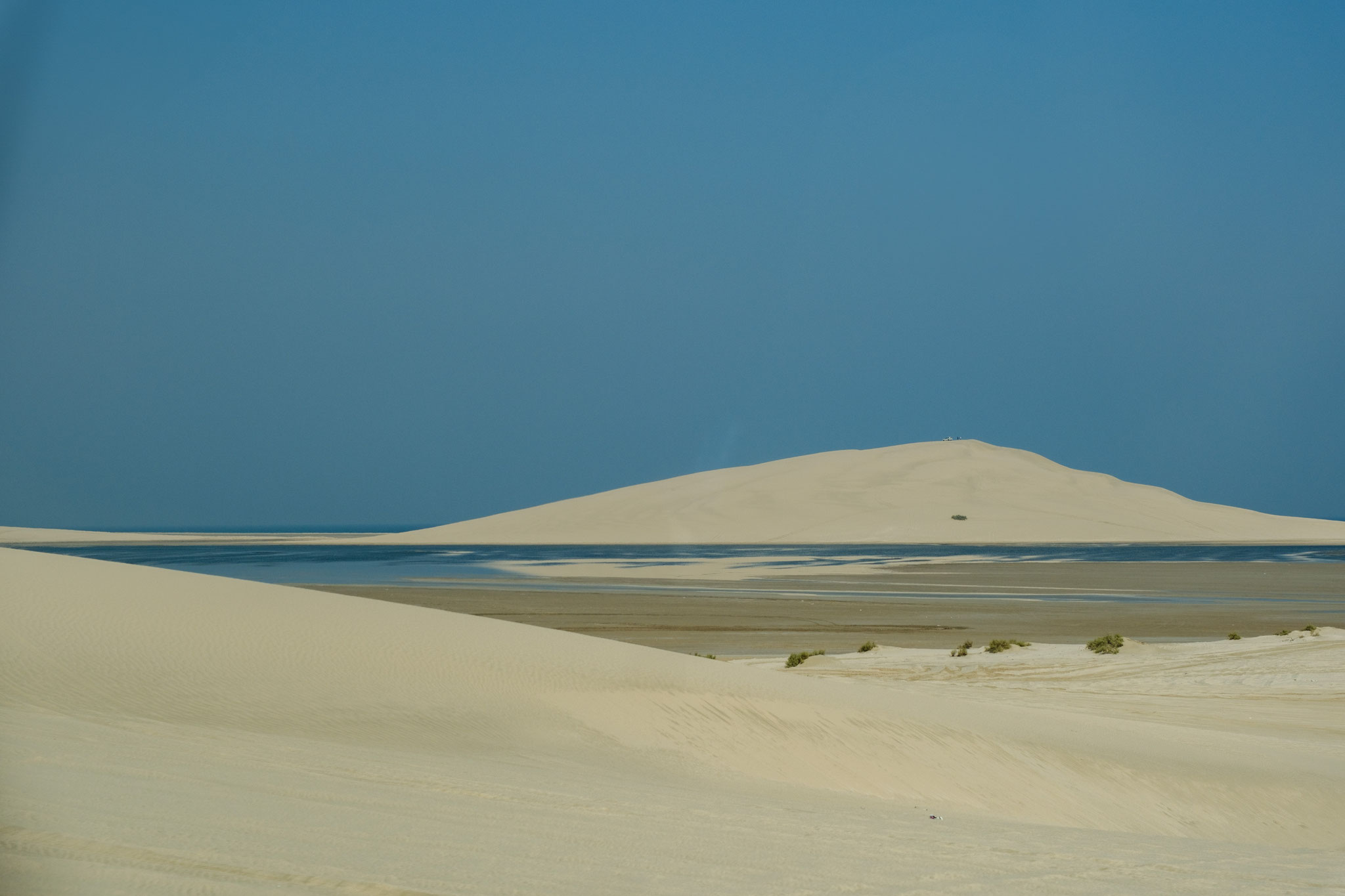
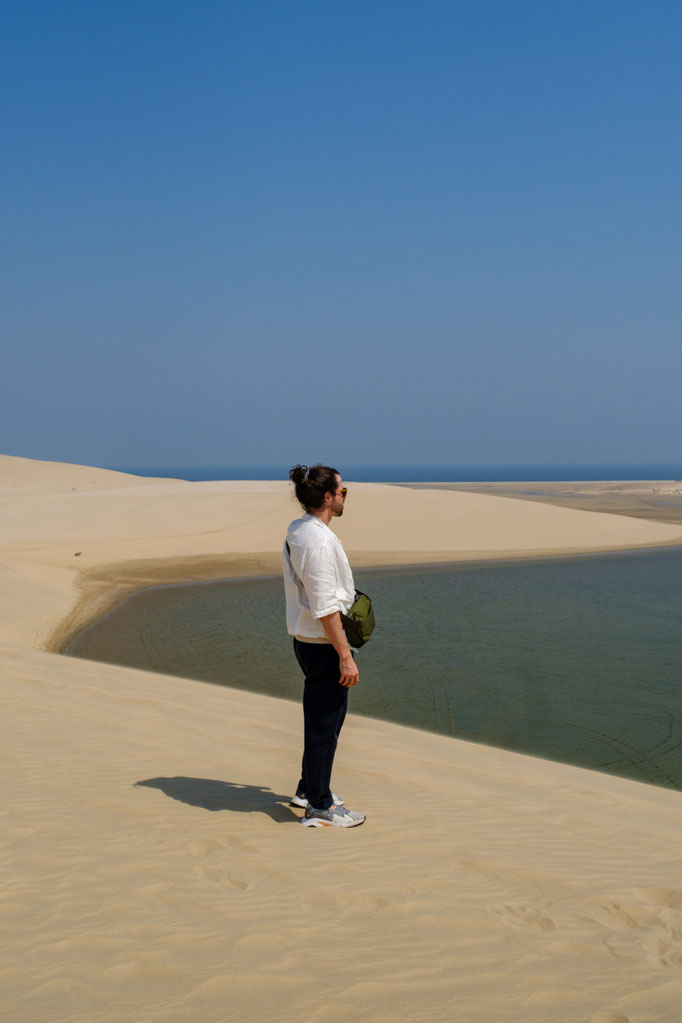
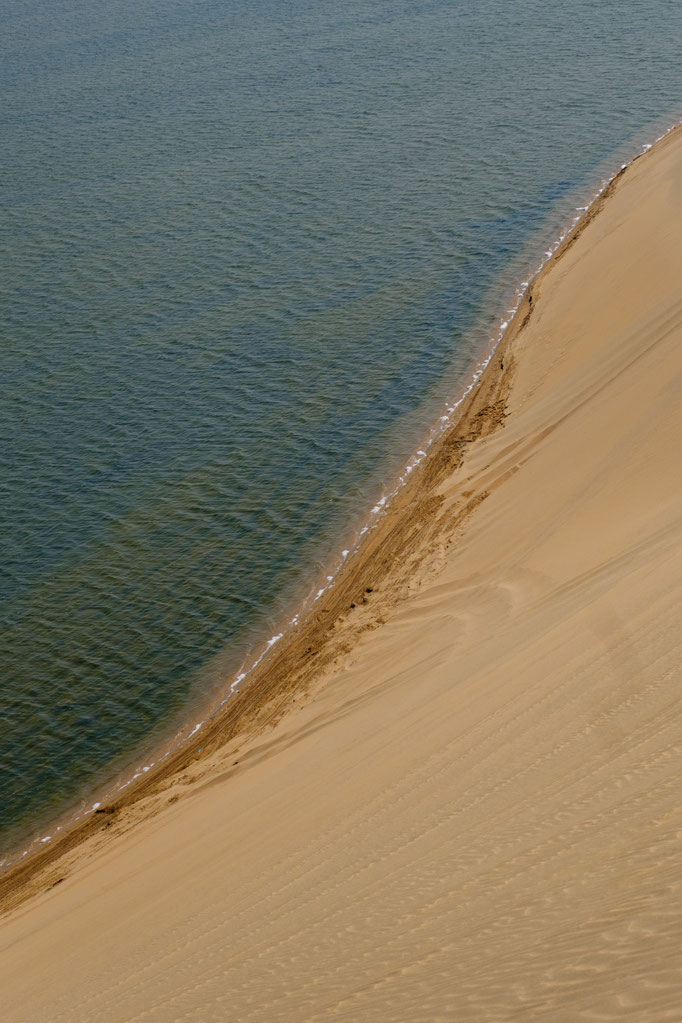
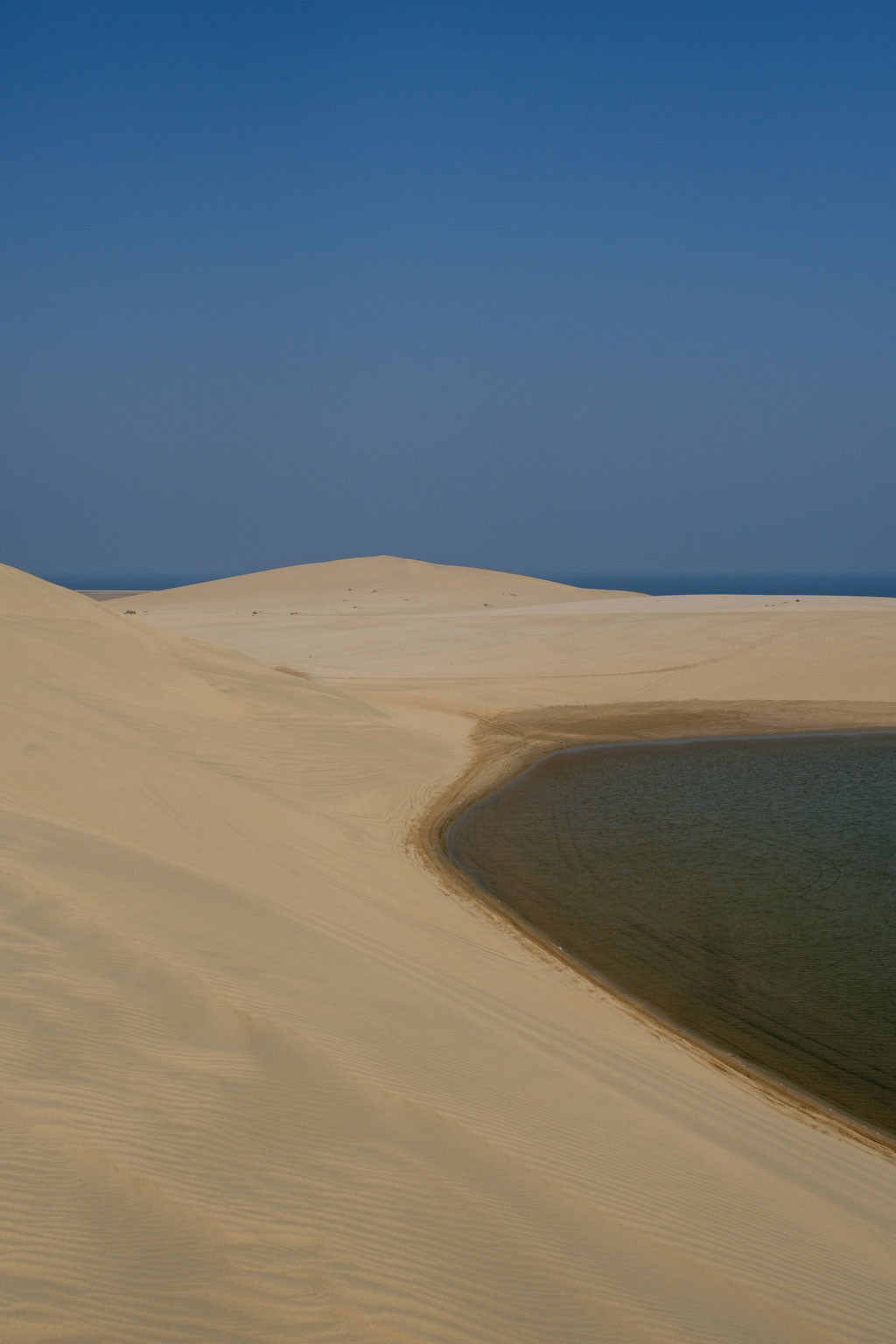
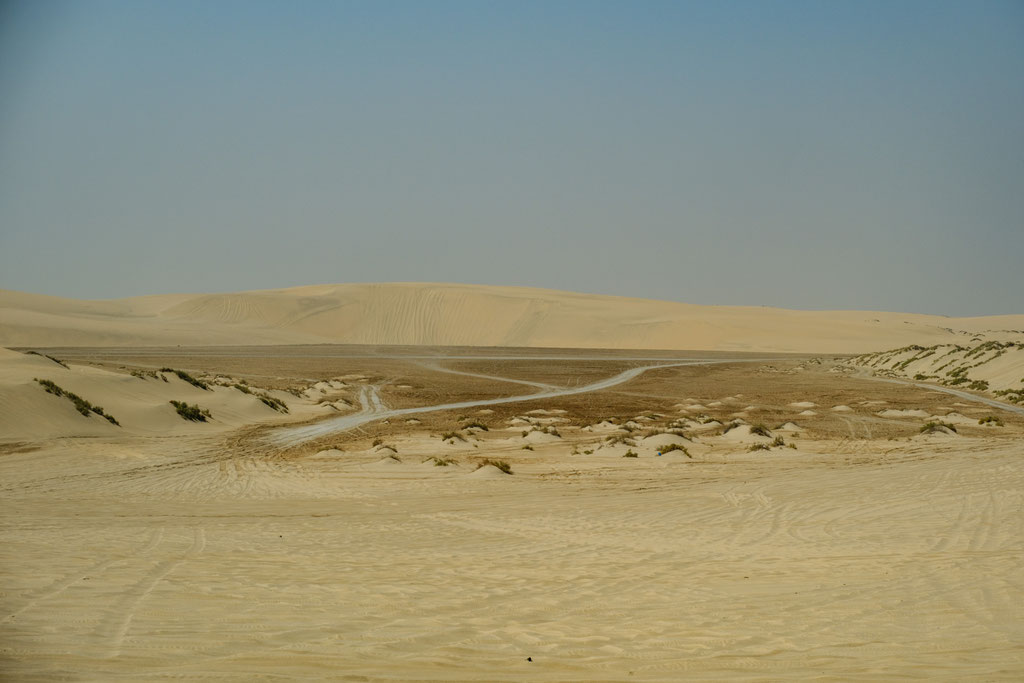
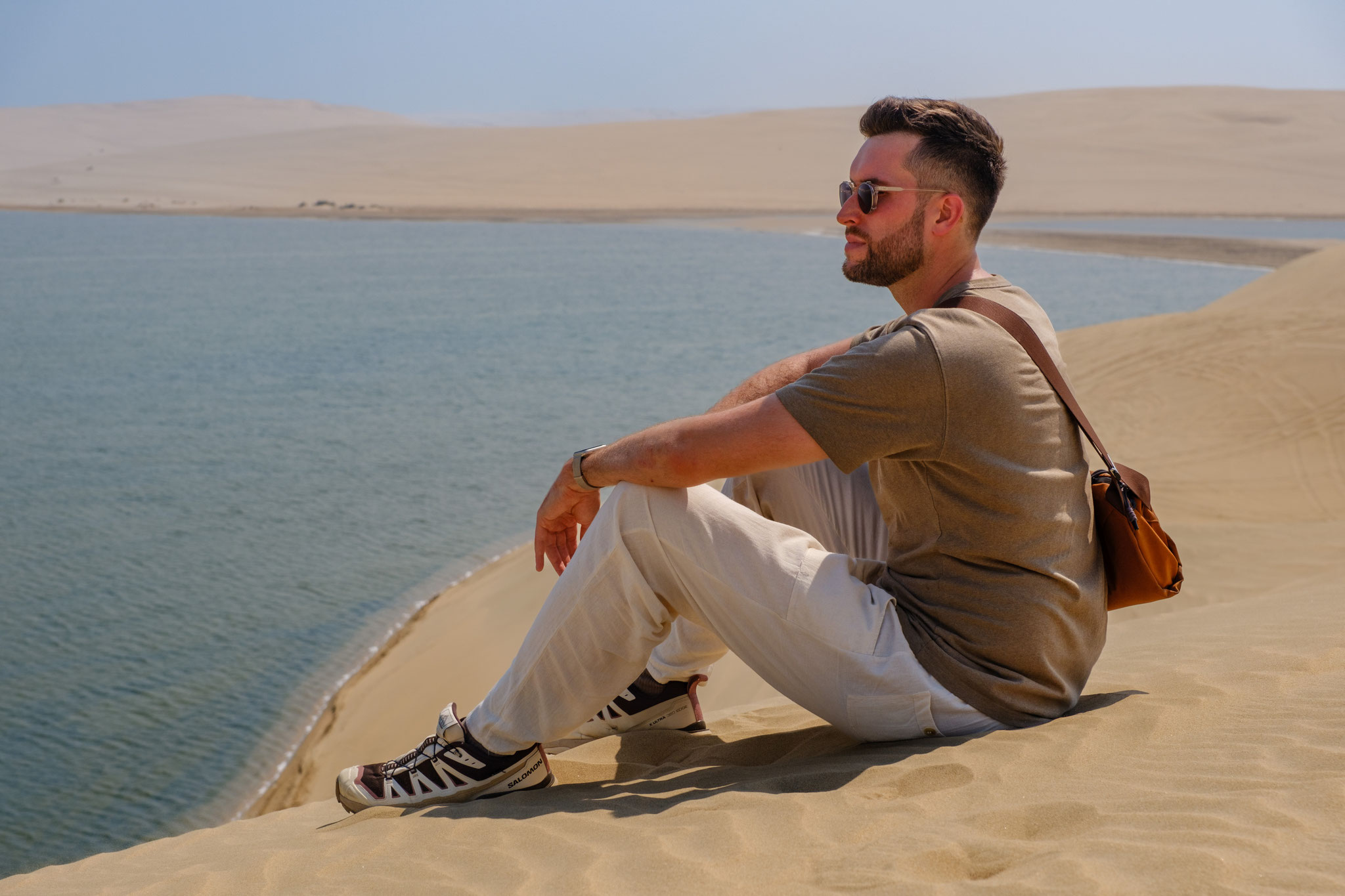
The final and undoubtedly most stunning stop of our layover tour was the Inland Sea, or Khor Al Adaid, a breathtaking natural reserve where sand dunes meet the turquoise waters of the Persian Gulf. Getting there involved driving into the heart of the desert, and our driver even stopped at a gas station along the way to refill the tank and adjust the tire pressure for the sandy terrain. The first few minutes were exhilarating — the 4x4 bounced and slid over the dunes, giving us a real taste of desert adventure. I (Thomas) quickly realized my stomach wasn’t prepared for the ride, but it was impossible not to be amazed by the endless sand dunes stretching as far as the eye could see, with the Gulf in the distance.
Once we finally reached the Inland Sea, the views more than made up for the bumpy ride. Khor Al Adaid is a rare natural phenomenon, an inland tidal embayment where the sea flows deep into the desert, creating a serene and almost otherworldly landscape. It lies close to the border with Saudi Arabia, and its unique combination of water and sand dunes makes it one of Qatar’s most photographed natural attractions. On the drive back to “modern life”, we also made a brief stop to see oryx, Qatar’s national animal and a symbol featured on Qatar Airways’ logo. It was the perfect way to round off our whirlwind desert adventure, providing a final glimpse of Qatar’s incredible natural beauty before heading back to the airport.




FINAL THOUGHTS
Our 12-hour layover in Doha turned out to be an unforgettable adventure. From the striking architecture of the National Museum of Qatar and Katara Mosque to the bustling charm of Souq Waqif, the Venetian-style streets of The Pearl, and the serene beauty of the Inland Sea, each stop offered a unique glimpse into Qatar’s mix of tradition, modernity, and natural wonders. Taking a guided tour made it easy to see the highlights efficiently, enjoy air-conditioned comfort in the scorching desert heat, and focus entirely on the experience without worrying about logistics. Doha may not have been on our original travel radar, but it left a lasting impression. Even a short Doha layover can turn into an extraordinary journey, giving you a taste of everything this fascinating country has to offer!
And now it’s your turn! How was your layover in Doha? What were your favorite spots in the city, and do you have any tips or hidden gems to recommend for short visits? We’d love to hear about your experiences and suggestions, so share them with us in the comments below!
YOU MIGHT ALSO LIKE..